The Yangtze Patrol Message Board
(Although individual responses are not always listed here, I do answer all email I receive)
________________________________________
From: Steve Harvey
To: Crispin Garcia
Date: Saturday, Jul 9, 2016 12:13 PM
Subject: USS Villalobos Changa-Sha 1923
I recently rediscovered this photo of the Villalobos crew dated on reverse as CHANG-SHA FEB 1923.
My great-uncle Arthur Kallum was the radioman on the Villalobos at this time.
I am sending this photo to you so that it may be shared with those with interest in the Yangtze Patrol.
Uncle Art is the young man in the last row upper right corner.
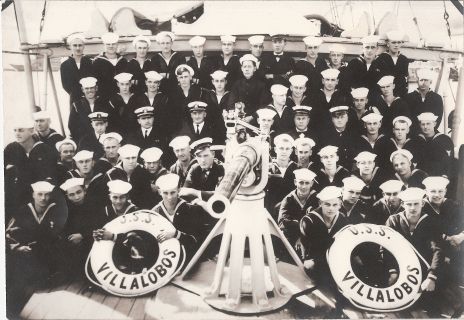
Click above image for larger size!
______________________________________
From: Geoff Toole
Sent: Thursday, Apr 7, 2016 5:18 AM
To: Crispin Garcia
Subject: The Sailor's Homer
Hi Cris, hope you and your family are doing well.
I read The Sailor's Homer about a month ago and can say that it is a
fascinating read. Rarely are books written from the Navy's enlisted
man's point of view, but this biography of Richard McKenna is an
extraordinary look into what it was to be an enlisted man in the Navy
during the 1930's through the 1950's.
The author, Dennis L. Noble, had access to Richard McKenna's
private papers, as well as doing abundant research found in logs for
ships that Petty Officer McKenna served aboard. You learn about how
much McKenna loved Asia and can easily see where the ideas and roots of
"The Sand Pebbles" were born.
A great read, meticulously researched, and having been an enlisted
sailor in the United States Navy during the Vietnam War, a truly
fabulous insight into an enlisted sailor in Asia.
A must read for all The Sand Pebbles fans.
Geoff Toole
______________________________________
From: Dennis Noble
Sent: Wednesday, May 28, 2015 10:25 AM
To: Crispin Garcia
Subject: Richard McKenna biography
Cris,
After a long desire and research to write a biography of Richard
McKenna, the Naval Institute Press is going to publish the biography
under the title, The Sailor’s Homer: The Life and Times of Richard McKenna, Author of The Sand Pebbles.
They have the best book jacket illustration that I have ever had and
they even kept my original title. The book is due out in November of
this year.
Would you like to review an advance copy of the work for your web site?
If so, I will put your name into the marketing people of the press.
They will probably send you a galley copy of the book. Then after the
book comes out, if they do not send you a hard copy, let me know and I
will bug them.
I do not know when they plan on sending out the copies, have just
finished the copy editor stage and they must send to me the page proofs
and then it goes to the printer. Marketing, rightfully, likes to have
things lined up so schedules can be met.
The only way I was able to do the biography was using the McKenna
material at the Richard McKenna Charter High School at Mountain Home.
It was a fascinating project and I hope you like it.
Best wishes,
Dennis
PS. Right after finishing with the first editors of the biography, I
entered the Naval History Essay Contest and received 2nd prize on a
short essay of McKenna as a naval hero. It will be published in Naval
History in August.
______________________________________
From: Daniel Keefe
Sent: Wednesday, February 04, 2015 3:29 AM
To: Crispin Garcia
Subject: USS Panay Incident
Crispin,
I am an American who has been living in Shanghai for the last 18 years.
About a year ago, I coincidentally came across the story of the USS
Panay. I started to do some more research on the incident which then
connected me with Nick Sparks (the individual who put together the USS
Panay Memorial website) and, much to my surprise, General Bill Anders
(Apollo 8 astronaut and son of the Executive Officer of the USS Panay -
Lt. Arthur Anders).
There are a lot of pictures and videos of the Panay as it was sinking
back in December 1937. I have been using some of the still images as
well as other documents (e.g. Navy Court of Inquiry) to attempt to
determine the spot in the Yangtze River where the ship went down. After
some research, I am reasonably confident of the location. I took a trip
from Shanghai to the location near the city of Maanshan last year to
confirm my theory. My visit was not successful and, unfortunately, I
have not found the time to make a return visit - yet.
In the meantime, I have been trying to find out what happened to the
Panay - Is it still at the bottom of the river? If not, what happened
to it? Was it salvaged? If so, who salvaged the ship and what happened
to the items which were on board? I know that that a few of the items
were salvaged a few weeks after the sinking but the ultimate fate of
the ships hull remains unknown.
I am stuck on this one and looking for a break. I came across your site
today and was hoping you or some of your contacts might have
suggestions regarding where and how to follow up on this one.
Thanks!
______________________________________
From: Carter Smith
Sent: Wednesday, November 19, 2014 03:36 PM
To: Crispin Garcia
Subject: The Sand Pebbles...
Hi Crispin --
I'm Carter Smith, and my Dad was Adm. Allan Edward Smith (b1892). In
1926-1927 he was exec of the USS Villalobos and met and evacuated my
mother Margret Vincent (b1902) during the troubles in Changsha. She was
playing hostess for her brother John Carter Vincent (b1900) at the US
legation there. She was on her way home to Macon Georgia, but persuaded
the dashing naval officer to propose and they were married in Shanghai
on Feb 12, 1927.
It is my understanding the the Sand Pebbles story was inspired by their
love affair. They were invited and flown to the opening of the movie.
I got a copy of the Sand Pebbles movie a few years ago -- but it had a tragic ending.
QUESTION: IS THERE A HAPPY ENDING VERSION OF THE MOVIE? I have a memory
of them escaping down the river happily embracing each other.
Thanks for all your hard work on the Sand Pebbles movie site. It is really great.
If you have any info on the happy ending version, please let me know. And if I can help in any way, please contact me.
All my best, Carter Smith.
______________________________________
From: Robert Moore
Sent: Tuesday, February 25, 2014 08:46 AM
To: Crispin Garcia
Subject: Yantze Patrols
Hello!
I'm a grand-nephew of a River Rat. Clyde E. Emerson served aboard the
Tutuila from the late 20s through the early 30s. I'd be happy to share
some photos if interested.
Best Regards,
Robert Moore
______________________________________
From: Tean Roberts
Sent: Thursday, November 28, 2013 11:44 AM
To: Crispin Garcia
Subject: Yangtze River Patrol Message Board
Hi there,
My name is Tean Roberts, I am researching the Yangtze River Patrol on
behalf of my father, British military author Damien Lewis.
He is currently in the process of writing a book featuring some of the
river patrol boats around the time of the Fall of Singapore, focussing
on the life of a British Pointer dog named Judy who was the mascot of
the HMS Gnat and HMS Grasshopper, which were boats on the river at that
time.
Your website is very informative & very interesting and you've
clearly put a lot of work into it - you must be the authority on the
Yangtse Patrol. So with this in mind I wonder if you might be willing
to help us in our research?
Mr. Lewis is very interested in speaking with any survivors or their
families of the Yangtze River Boat patrols - do you happen to know if
there is anyone who might be willing to discuss this with us? Or might
you yourself be willing to share what you know?
I know that because of the nature of the topic, and also because it was
so long ago it will be hard to find many people to talk to, so any help
you may provide would be incredibly useful.
I was also wondering if you might be able to put a post on the
messageboard for me in the hope of contacting someone with any
information about what life was like on these boats at the time?
Please do get in touch with me, direct if you can offer any help.
Tean Roberts
Research & Production Assistant
phone: 07973 624235
Email address: teanroberts@gmail.com
______________________________________
From: Clark Rook
Sent: Tuesday, August 20, 2013 12:11 AM
To: Crispin Garcia
Subject: Yangtze River Patrol
Not quite sure how I found your website, but after reading the various inputs, I might be able to add some information.
My father, Eugene C. Rook, was as a young officer (he retired as a
captain in 1954) involved in operations in the Yangtze River Patrol
during the 1926-28 period. I have many publications and pictures of
those years which to this day I find interesting to periodically
re-review. One of the items is a book titled "Yangtze Patrol" authored
by RADM Kemp Tolly and published in 1971 by the Naval Institute Press
in Annapolis, MD.
Another book you might want to get is titled "The Life and Times of
General Two-Gun Cohen" authored by Charles Drage and published by Funk
& Wagnalls Co. in 1954. "Two-Gun Cohen" is by name Morris Cohen. As
a note about General Cohen he was the personal aide and body guard to
Dr. Sun Yat-sen and later led Chiang Kai-shek's Chinese regulars.
As I said, they were very interesting years and my best wishes to you to pull that history together.
Clark Rook
Capt USN (Ret.)
______________________________________
From: Susan Rabb
Sent: Friday, March 01, 2013 6:51 AM
To: Crispin Garcia
Subject: Cmdr. John T Salistean
I am the oldest daughter of Cmdr. John T Salistean (d. 1 April 1990).
He was Commander of Task Group 78.2 from early March to the end of May
1946. He wrote a record (7 pages) of his many trips up and down the
river in 1989. When he was anchored off Woohu, he met the famous Dr.
Anne Walter Fearn who he describes as great lady and "a Hair-pin". He
had a copy of the newspaper article describing her career at her
Memorial Service. I have learned so much from your postings and want to
include a history of the Yangtze River Patrol in the book that I am
compiling from my father's papers and oral history. Resources for
researching a naval career would be helpful. Thank you for your
wonderful website and I look forward to hearing from you.
Susan (Salistean) Rabb
______________________________________
From: James Leedham
Sent: Saturday, January 26, 2013 9:55 PM
To: Crispin Garcia
Subject: Tuttila 1941
Crispin
My dad was on the Tutuila in 1941 and was one of the crew that exited
to India in '42. Now at 94 he is looking to reconnect with that part of
his life. I suspect we are a few years late but just found your message
board and thought I would give it a try. I have heard his stories all
my life and he still likes to tell them. Is there any chance you could
point me in the direction of any Tutuila river rats.
- jim
-----------------------------------------
Response: Jim, the South China-Yangtze Patrol Asiatic Fleet, an
organization made up of members who served in the South China Patrol or
Yangtze River Patrol, as well as those interested in the subject,
disbanded following the annual reunion in April 2008. However there is
a blog titled "China Gunboatman" that seems semi-active (although it
hasn't been updated for 2 years), there is a slim chance that you may
have some luck there.
http://chinagunboat.blogspot.com/
______________________________________
[2012]
From: Darren
Sent: Saturday, December 22, 2012 10:24 AM
To: Crispin Garcia
Subject: Service on Yangtze Patrol during the 1920s and 1930s
Crispin,
I really enjoy your internet site, as it has a lot of interesting
information. I am trying to write a novel set in about 1934. The main
character is going to serve aboard a fictional gun boat on the Yangtze
River, as a Gunner's Mate on one of the boat's two 3" deck guns. I will
have him serve from 1928-until the sinking of the USS Panay. I was
wondering if you or any of the readers of your internet site could help
me. I need to know where the Gunner's Mate school was in 1927 when my
character joins the navy. I would like to know where the main base was
for the gunboats of the patrol was located. I remember reading
somewhere that they had a base in Shanghai, but I can't find out any
information about the base. I would like to know what life would have
been like for him serving in China during this time period. What kind
of tattoos did the sailors have. Any and all info that you or your
readers can provide will be greatly appreciated.
Darren
______________________________________
From: Nelson H. Lawry
Sent: Tuesday, June 26, 2012 11:36 PM
To: Crispin Garcia
Subject: surviving USN 3-inch/23cal mounts, 2012
Crispin,
Thanks for so promptly posting my input on the Yangtze Patrol message
board. The following website chronicles yet another surviving Mark XIV
3-inch/23cal deck gun, this one shown in a rather "busy" shop yard in
California.
http://www.warrelics.eu/forum/ordinance-ammo/wwi-us-3-inch-deck-gun-info-needed-19778/
The owner appears not to be a weapons supplier to the motion picture
industry, nor does he claim the gun is the one used in The Sand
Pebbles. The message thread and the accompanying photo from the movie
only mention the two guns are of the same type. I suspect you've seen
The Sand Pebbles many more times than I have, but I seem to remember
the forward gun mount aboard USS San Pablo was painted green, and I
wondered at the time I first saw the film if such color was standard
for naval deck guns on Yangtze Patrol warships. Do you share my rather
certain memory that San Pablo's gun mount is green?
And the Washington Navy Yard Museum has one, very likely also a Mark XIV mount:
http://www.subchaser.org/poole-gun-set
So there appear to be at least four 3-inch/23cal gun mounts remaining,
and maybe a fifth if San Pablo's still lurks out there somewhere.
Nelson
______________________________________
From: Nelson H. Lawry
Sent: Monday, June 25, 2012 8:33 PM
To: Crispin Garcia
Subject: The real 3-inch/23cal deck gun aboard replica gunboat USS San Pablo
Very much like several other folks posting here, I stumbled
unexpectedly across your message boards. Clearly a lot of entries have
preceded mine, so I don't know the totality of subjects discussed, but
at the end of my posting, I will have a question (I promise). I would
be surprised, however, if my subject matter is old hat.
The difficulty is that I have to approach the question from three or
four different angles historically, which alas will involve a bit of
geekspeak. No way around this logistical problem that I can figure, so
again, endless apologies.
In keeping with the general theme of this site, I need to set the
stage. Jake Holman reports aboard USS San Pablo in 1926, a time of
great unrest in China. That year is about two years before the
commissioning of the USN Yangtze Patrol's 'new six', the half-dozen
brand new river gunboats of three different lengths, the shortest of
which at 159.5 feet will permit access to the upper reaches of the
river during most seasons of the year. Thus Jake arrives before these
vessels are available, so his ship would likely be a fictional sister
of either of the first two generations of gunboats still seeing
service, the ex-Spanish USS Villalobos and USS Elcano, acquired as war
prizes in 1898, and the just pre-WWI USS Monocacy and USS Palos.
Conventional wisdom claims that San Pablo is based on Villalobos, and
that may be true in terms of life aboard and operational history, but
"Sand Pebble" looks not a whit like this Spanish-built gunboat, but
rather strongly resembles the new breed of the mid-late 1920s, for
whatever that's worth.
San Pablo's armament is NOT identical to the new six, however, except
her forward main gun and the usual small arms firing infantry caliber
rounds. The new gunboats had two 3-inch gun mounts, one each forward
and aft. The shortest two vessels, Guam and Tutuila, were armed with
3-inch/23cal dual-purpose guns, and the other four vessels with
3-inch/50cal dual-purpose mounts. Because the Yangtze River gunboats
were subject to potshots from bandits, pirates, revolutionaries, war
lords' factions, and other malcontents, the main guns bore special
shields. All guns were dual-purpose because of the danger from
aircraft. Here are photographic images of the 3-inch/23 DP aboard Wake
(ex-Guam), and the 3-inch/50 DP aboard the larger ones, as exemplified
by Panay:
http://navalwarfare.blogspot.com/2010/07/uss-guam-pg-43wake-pr-3.html
http://en.wikipedia.org/wiki/File:Uss_panay.png
In the movie version, USS San Pablo sports a 3-inch/23 forward and a
smaller mount aft. The latter is seen only rarely and never close up,
and I think is always shrouded under a canvas gun cover, but to mine
eyes best fits a 3-pounder (47mm) in general shape and size, but
certainly is no larger than a 6-pounder (57mm). My question, as will be
revealed, has to do with the larger forward mount.
The USN's 3-inch/23cal gun, in most marks a low elevation angle piece,
was its second antiaircraft gun-other than machine guns-once it had
been modified to dual-purpose. It replaced the Maxim-Nordenfelt
1-pounder (37mm) pompom first acquired in the 1890s as a shipboard gun
to be used against hostile torpedo boats, and in fact saw successful
use in the brief unpleasantness with Spain during 1898. Even before our
involvement in World War I, these guns were placed on higher angled
mounts and served as the USN's first AA guns, commonly on flush-deck
destroyers. Later built DDs of the same and subsequent classes got the
3-inch/23cal DP guns, but these guns were not very successful in the AA
role, because they were entirely manually operated, unlike the better
(but again hardly perfect) 3-inch/50cal guns with their semi-automatic
breech mechanisms. A semiauto breech mechanism uses the force of the
gun's recoil to eject the empty cartridge case and then the breechblock
remains open to receive the following round. Of course given World War
II's fast aircraft, no light AA gun that was not fully automatic could
be successful, and likewise no medium AA gun not semiautomatic could be
as well.
The construction of the replica Yangtze River gunboat-fictitiously
named San Pablo-in the mid-1960s at the Vaughn & Yung Engineering
shipyard in Hong Kong is well known.
http://www.thesandpebbles.com/production/production.html
She was later renamed Nola D. for the timber trade in the Philippines,
even later used in various survey projects in Indonesia, and broken up
in Singapore almost precisely a decade after being built.
http://www.thesandpebbles.com/san_pablo/demise_sanpablo.html
I am a member of a loosely organized group of aficionados that
finds and documents monument guns of military and naval origin now
adorning town squares, village greens, veterans' and war memorials,
cemeteries, and the like. Although not absolutely certain (these things
never are), just two surviving USN 3-inch/23cal deck guns are known to
survive, both in New Hampshire in near proximity to each other. Both
have been in place for many decades.
Having provided that ordnance background, my question (finally!): What
was the origin of the single 3-inch/23cal deck gun mounted on San Pablo
for the film Sand Pebbles, and what happened to it after production was
finished? Certainly it would not have been left aboard for the vessel's
more peaceful pursuits. I know that there are rental companies that
provide appropriate armaments for movie production to ensure period
realism, but what tickles my interest is the presence out there of
another USN 3-inch/23 deck gun.
------------------------
Response - Early last decade I found the 3 inch deck gun from the
San Pablo on the internet. It was a site that dealt in military
weapons, vehicles and so on for the motion picture industry. They
claimed it was the actual gun off the San Pablo although this would
have required shipping it from Hong Kong to California. I was a little
skeptical but anything is possible. Years later when I tried to locate
the gun again it was gone. The website also disappeared or changed
location. I have no idea where the gun originated from although that
information may be in the UCLA Film Archive.
______________________________________
From: Mary B Knape
Sent: Tuesday, April 10, 2012 7:17 PM
To: Crispin Garcia
Subject: My Grandfather commanded the USS Tutuila in 1930-31 on Yangtse
Dear Sir,
I am so glad to find this message board! I guess I am to send this
email to you in order to participate. Since I do not know the protocol
for this site, please excuse my method of contact, if not correct.
My grandfather, Lawrence P Bischoff (1888 - 1970; USNA '12 graduate)
commanded the USS Tutuila in July 1930 - July 1931. I have in my
possession his photo album from his time in China. I would be happy to
post some of those if they would be of interest. He loved his camera.
The Department of Navy's Naval Historical Center made photographic
copies of it in 1983 and returned it. I also have his ship's log from
the time there. Needless to say, I find this all fascinating. He moved
his family to China while he was stationed there. My dad LPB, Jr. (USMA
Jan '43 graduate) was only 13 when there but used to talk about I have
some of the beautiful Chinese furniture and china they purchased while
there so it is a consistent reminder for me. I remember my grandfather
well and honor his service.
He was in command of one of the destroyers, Bulmer of the U S fleet at Shaghai July 1931- Mar 1932.
Some data from his notes in photo album:
While Captain of the gunboat, he saw 6 actions on the river with
communist bands. Using their main batteries, the longest of Chameda
Bluff. One action while convoying " Ichang" on which his family was
traveling.
Guns: 8 machine guns, 2-3 anti-aircraft.
Some of Names mentioned and photographs of them (some may be misspelled because his handwriting):
Mrs Ross, British, Ichang, he was mgr of Jardine Steamship Lines
Mrs. Rohdes
Brown (man)
Cook (woman)
Dagorne (woman)
Leftin (woman)
Mary Lou Monroe
Capt. Auboreau
Mrs Weaver
Mrs Anderson
Below French officers of gunboats
Dr Lajat
Capt Menvielle
Capt Maraboua
Lt. Speer
Dr E E Walter medical officer of USS Tutuila
Gen Kuo
Salte
R.E.S. La Grandiere - Capt. Maenrielle, of French Gunboat
Capt. John Dagorne skipper of Fook-Tong, French upper river steamer
Article of Admiral Charles B McVay
Lt Comdr R D TIsdale
Capt. and Mrs "Andy" of the YRSS Iping - wonderful host on his ship but had several bad crack-ups on upper Yangtse
General Kuo Sheon was in charge of 21st Army in Ichang and my
grandfather's best friend in China - much dreaded by communists, troops
were Szechuanese. Last heard of was at Sasha command
Holung - Middle River - Yangtse mileage 199 above Hankow Kienli was
stronghold of Holung and his army - one of China's most hated Bandit
Chieftain. all ships were obliged to pass within 200 yards of this
point in route to Hankow - Ichang and their encounter from shore fire
were every day occurrences winter of 1930-31. As all ships carried
armed guards there were many a hot Encounter - Japanese had two
casualties there. These bandits would use small cannon concealed in the
dikes - most part muzzle loaders 3 - 5" bore - and filled with rock and
scrap iron and let go ar passing ships. Ships however had bullet
plating for protection so little damage was done. However a shower on
the bridge was uncomfortable. We blew up several of these guns but they
could easily replace them. Never could ascertain what casualties
inflicted but must have got many with high explosives. Had 6 actions
with them. most noteworthy where British Steamer "Kian" was aground and
being peppered by 200 bandits behind the dikes. Their armed guard was
ineffective and no steamer could help them. We threw shell after shell
into their trenches
Manager Jesse Poole, Ichang. They practically lived at his home
Mrs VonDreyer
American Consul Lynn Franklin
Vice Consul Chas. Brennan
One note I found interesting:
" The level of the water in
Weshan Gorge has been known to rise 190 feet during high water season
summertime - The variation of level at Ichang is 55 feet at Chungking
110 feet. The water level once raised 12 feet in 2 hours at Chungking -
It brought down houses - and heaps of trash.
A Newspaper Article:
"Chinese Fire at American Gunboats
The Navy Department has been advised by Admiral Charles B McVay, Jr.,
US Navy, commander-in-chief of the US Asiatic fleet, that the US
gunboat Palos was fired on November 16 and the US gunboat Tutuila was
fired on Nov 17 while steaming along the Yangtse River.
The Palos, commanded by Lt. Comdr R.D. Tisdale, US Navy reported a
muzzle loader fired on his ship when she was five miles below Chengling
Bluff, that he saw no splash, although smoke came from inside clump of
trees on the western shore, and that he did no return the fire.
The commanding officer of the Tutuila, Lt Comdr L.P. Bischoff, US Navy,
reported that while his ship was en route to Hankow she was fired on by
five pieces at Temple Hill. The Tutuila silenced the fire with 21
rounds of 3-inch shell. About a half hour later the ship was fired on
by two mortars. The fire was silenced with five rounds of 3-inch and
200 round machine gun. the Tutuila reported no casualties.
Information received by radio from Admiral McVay on November 18 stated that the USS Tutuila was again fired on
Rifle fire from the shore a short distance above Chengling was
silenced by 27 rounds of 3-inch shell and 650 rounds of machine gun.
There were no casualties aboard the ship."
Included in the album were other articles of mention for Tutuila and
Attacks and another Reuter article about my grandfather meeting with
General Kuo
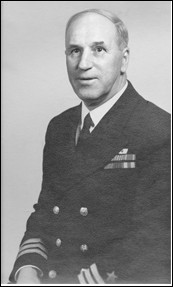
Lawrence P Bischoff
I hope this is of some interest to others. I will be putting the album as well as the log onto the computer for my archives.
Thank you,
Mary Knape
_____________________________________
From: Ian Workman
Sent: Thursday, March 15, 2012 12:57 PM
To: Crispin Garcia
Subject: The Sand Pebbles
I recently read my grandfathers' (Rear Admiral Hugh T England) memoirs
and realized that he was in charge of the English contingent of vessels
which was present at Nanking when the armies of the two Chinese
warlords attacked, and it was his vessel which was the only English
vessel to open fire on the Chinese as they were advancing upwards
towards the American Commission, thus preventing the Commission from
being overrun. I believe that he was sent a letter of thanks by
Congress for this action.
Best Regards
Ian Workman
_____________________________________
[2011]
From: Dennis Noble
Sent: Friday, May 06, 2011 9:43 AM
To: Crispin Garcia
Subject: Research material on Richard McKenna
Crispin,
Wonder if you could put this on your Sand Pebbles Site:
I have just finished with the first phase of researching Richard
McKenna's life. Would like to point out to anyone interested in the
author of The Sand Pebbles the marvelous research material available at
the library of the Richard McKenna Charter High School in Mountain
Home, Idaho. The even have the shooting script for the movie, plus many
other items and especially letters McKenna wrote. It is a treasure
trove. Plus the library is a wonderful place to work. Thanks.
Dr. Dennis L. Noble
_____________________________________
[2010]
From: Hillar Kalmar
Sent: Sunday, December 05, 2010 1:04 PM
To: Crispin Garcia
Subject: A Yangtze River ship captain's memoirs
Hi Crispin,
I came across your website/message boards while doing some research
related to a relative's memoirs. He worked for Standard Oil in China
during the 1920's and 1930's and was captain of one of the Standard Oil
ships sunk in the Panay incident, the anniversary of which is just
coming up on December 12th.
While translating Capt. Mender's memoirs, I soon realized there was
likely an audience broader than just his descendants for this first
hand account of events in the Far East and China during this era of
colonialism, treaty ports, bandits and warlords. Accordingly, I've made
the memoirs available in a book that may be of interest to those
viewing your site.
Thirty Years A Mariner in the Far East 1907-1937, subtitled The Memoirs of Peter Mender, a Standard Oil Ship Captain on China's Yangtze River, is available at Booklocker or Amazon.
Hillar Kalmar
------------------------
Response - For readers interested in this book there is an excerpt
on the Booklocker.com website which can be accessed by clicking here.
______________________________________
From: Lance Pinamonte
Sent: Tuesday, March 02, 2010 1:40 PM
To: Crispin Garcia
Subject: Re: Father on Tutuila
Crispin,
It will take me awhile to get through all Dads papers, I have two
large boxes full of memories, I have many Yangtze river patrol
newsletters also. If the members of message board find them
interesting, by all means post them..
Lance
-----------------------
Response - I have created a basic webpage for some of Lance Pinamonte's father's collection.
It is available here...Bruno Pinamonte. - CG
______________________________________
From: Lance Pinamonte
Sent: Sunday, February 28, 2010 9:30 AM
To: Crispin Garcia
Subject: Father on Tutuila..
My father served on the Yangtze, I have many artifacts, pictures, and
memorabilia from that period. I was fortunate to be able to take part
in on of the last reunions the rats had, I am guessing most are gone by
now, my father passed in 92.. An interesting aspect of the river rats
is the fact that some of them drove the FIRST Burma road, my father was
a intricate part of this operation to resupply the gunboats.. I also
had the pleasure of meeting Admiral Tolley, and a few others, they were
great men..
I guess my question is, why don't we have a website that we can post
some of these memories on? Pictures, documents, and even stories told
by our loved ones?
Sincerely,
Lance Pinamonte
-----------------------
Response - Lance, that is an interesting point. Perhaps you will
find what you are looking for at the "China Gunboatman" Blogger/website
where they continue to keep the Yangtze Patrol history alive. As in the
past I am also willing to post any photos and information to this
message board. If there is a great deal of information to be shared I
can create a separate section on this website. - CG
http://chinagunboat.blogspot.com/
______________________________________
From: Patrick Moloney
Sent: Thursday, February 04, 2010 9:40 PM
To: Crispin Garcia
Subject: San Pablo info
Hi,
I'm Pat Moloney, let me pass credentials first then some fun info.
I'm a merchant marine captain, Master of the WW II Liberty Ship SS Jeremiah O'Brien in San Francisco.
I was a Military Sealift Command Master out in the Far East for years. Was a confirmed Crasiatic, complete with Japanese wife.
We CTF 73 folks considered ourselves to be the straight line tradition offshoots of the Asiatic Fleet.
When I was running amok out there in the early 80's I had the
opportunity to correspond with RAdm Kemp Tolley. What fun that was. Adm
Tolley and I had a crewmember in common. Adm Tolley was a China
gunboater and wrote about it. Adm T noted in one of his letters that
the bar scenes in SAND PEBBLES were exactly correct. That was his word
"exactly". That would be the scene of Mai Li's "distress". I enjoyed my
letters with him. I was a Far East Master, he was a retired Far East
Admiral. We spoke the same language.
Anyway, wanted to let you know 2nd hand, but from a very reliable source, that the bar in Sand Pebbles is spot on.
What a fun little world we operate in.
Capt M/
______________________________________
From: Limpet6
Sent: Sunday, January 03, 2010 4:48 PM
To: Crispin Garcia
Subject: Coaling Quay in Shanghai
Anyone recall where the US Navy did coaling in Shanghai?
I'm guessing it was somewhere on the northern bank of the Whangpoo
River. Either just east of Soochow Creek or just south of the Old
Chinese City on the same bank.
~~~~~~~~~
R. L. Crossland
CAPT USN (Ret.)
http://dreadnaughts-bluejackets.com
______________________________________
[2009]
From: Steven Bryson
Sent: Saturday, December 12, 2009 8:38 PM
To: Crispin Garcia
Subject: USS Luzon bell correspondence...
Hello Crispin,
Regarding a recent posting on your fabulous TSP website about the USS Luzon bell.
This is from the 1 Dec 1997 issue of China Gunboatman, the quarterly
newsletter of the since disbanded South China & Yangtze Patrol
Asiatic Fleet (SCYPAF):
"Bell of the USS Luzon, brought up by divers in Manila Harbor about
1946. Lent to Admiral Farragaut Academy in New Jersey by Washington's
Naval History Center for the Academy's museum. Academy went belly-up
about a year ago and packed its furniture awaiting disposal. Alas! BELL
WAS STOLEN."
I would hope that the bell is still out there somewhere, owned by
someone who doesn't know what they have, rather than having been melted
down and sold for scrap.
Take care,
Steve
______________________________________
From: k91cero
Sent: Tuesday, December 08, 2009 10:31 AM
To: Crispin Garcia
Subject: USS Luzon
My father-in-law, VC Reynolds, served on the USS Luzon until his
capture in the Phillipines in May 1942. He told me recently that after
the Luzon was scuttled, recovered by the Japanese, renamed Karatsu and
ultimately torpedoed, the ship's bell was recovered and is now
somewhere in Maine. I would very much like to find any further
information on this. The end goal is to obtain a photo of the bell that
I could give to "Dick" as a gift. It would make an old sailor very
happy. Any help would be greatly appreciated.
Thanks
-----------------------
Response from forum contributor, author and historian Dennis Noble:
I have only two suggestions:
--Google in Maine Maritime Historical Societies and start asking
each of them if they have the bell, or know of it. I would also check
lighthouse museums in the state. Also try the Maine State Historical
Society: many of the museums talk to each other and you can pick up
info that way.
--This one I am not too sure about, but worth a try. Ask the ship
histories branch of the Naval Historical Center if they have any
information on this.
About the only suggestions I can think of right now.
______________________________________
From: JC Hollenbeck
Sent: Monday, November 16, 2009 8:23 PM
To: Crispin Garcia
Subject: My collection
Crispin,
My name is Jim Hollenbeck. I just stumbled across your wonderful site
and have been reading the message boards and felt I had to contact you.
I have a very large collection of photographs taken by George Neeb who
served in the US Navy from around 1920 till 1953. He was a very close
family friend and a shipmate of my father. We always called him Uncle
George. He served in the Asiatic Fleet and on the Yangtze River before
WWII.
I have somewhere near two hundred pictures in a huge book bound in
a hand tooled buffalo hide book with the US Navy Anchor on the cover,
with Neeb's name on the cover. The photos include photographs of a
night battle between what I believe is Japanese and British ship's,
many pictures of beheadings carried out by both Japanese and Chinese
officials, pictures of his ship mates at the Navy Club in the Bund,
photos George took after a artillery attack on a Chinese city. It is
very graphic stuff.
It is a amazing collection and I would like to publish it but have been
stymied by lack of information about the pictures, George did make
notations on most pictures but no dates! George died in the early
1960's and his only son died young, so I've been working in the dark,
this web site has given me my second wind. Do you have a book you would
recommend that would help me fill in the blanks, or any other
suggestions where to start?
Jim Hollenbeck
-----------------------
Response from forum contributor and historian Dennis Noble:
Jim,
I have written a book on the US military in China from 1901-1937, and
edited a naval officer's diary that served on the Yangtze Patrol from
1920-21.
One of the problems with photo albums is that people do not annotate
the photographs. From your brief description I would put the dates of
the photographs in the 1930s, when the Japanese were pushing hard into
China.
I would suggest, if you have not done so, read Kemp Tolley's, Yangtze
Patrol, the later edition, to get a feel for the U.S. Navy during that
period. You may want to check my bibliography for other books. If you
have contact with George Neeb's family, see if they will get you a copy
of his service career from the National Military Records Center in St.
Louis, I think the Naval Historical Center, which is on line, can give
you hints of how to obtain service records.
I do not know where you live, but the navy's historical center in
Washington, D.C., and their operational archives had a group of records
just on China which contains photographs. You might compare yours with
those. The U.S. Marine Corps (also in Washington area) also has a
number of photographs in their historical collections. I believe the
Naval Postgraduate School at Monterey may also have photographs. (I
believe the school put out a very good bibliography on the military in
China.) All of these locations, I believe, can be contacted on line.
Lastly, I think the best you are going to be able to do is say "in the 1930s," or whatever dates he served in China.
Dr. Dennis L. Noble
www.DennisLNoble.com
______________________________________
From: Joan B Zachor
Sent: Tuesday, November 10, 2009 6:19 AM
To: Crispin Garcia
Subject: Re: Wonder if anyone recalls
Thanks so much, Crispin. I love the fact that in spite of spending so
much of their lives in uniform, some in the navy, especially those who
had served in Asia, chose to commit these tiny, beautiful acts of
"uniform-sabotage" with their liberty cuffs.
As a teenager, I attended a missionary school in Latin America. Our
summer uniforms weren't bad, except for the fact that our starched
collars, which had to be buttoned on each day, left our necks quite
chafed. But our winter uniforms were hideous. Green wool dresses with
starched white collars and cuffs, brown cotton stockings, brown,
broad-brimmed, ranger-style hats, and brown blazers. Seniors who had
good grades were allowed to decorate their blazers with a patch that
said "For Finer Womanhood." Our brown leather belts were not to be
pulled so tight as to gather the fabric of our green wool dresses, but
rather more or less hung loosely on their belt loops. During the final
months of our senior year, we trimmed down the rims of our big, felt
hats, a tiny little strip at a time. We hoped that nobody would send
the entire class out to buy new hats when we were so close to
graduating, and we were right. Those tiny acts of rebellion felt
delicious.
It was a school rule, that no student, wearing her school uniform,
should be seen talking to a boy on the street. We used to groan and
laugh at the idea that any boy would want to talk to us while we were
wearing our hideous school garb. But, as seniors we believed we had a
chance some boy might find us worthy of notice if we at least trimmed
down our huge hats. We felt quite daring in our "trimmed brims" but I
don't think any boys noticed!
The fitted, dress blues, crackerjack jumpers are gorgeous. I hope the
navy men enjoyed looking so wonderful -- especially with their
rebellious, embroidered touches. Thanks for your message board and for
forwarding along my question to someone who might have an answer. Much
obliged,
Joan Zachor
______________________________________
From: Joan B Zachor
Sent: Monday, November 09, 2009 10:30 PM
To: Crispin Garcia
Subject: Wonder if anyone recalls
In one of your discussions on your excellent site, there was talk about
attaching embroidered panels to inside dress blues jumper cuffs to
produce "liberty cuffs" as Steve McQueen famously displayed in TSP.
I have a dress blues jumper listed on eBay right now, that has a dragon
inside the back collar area as well as on the cuffs. I know this is a
little off-topic but do you know if that ever became the custom among
those who were stationed in the east or if my particular jumper is an
aberration?
By the way, I have ordered the DVD set of The Sand Pebbles for myself
as all the discussion on your site and in other blogs I've been reading
sparked my interest in seeing that wonderful movie again in as close to
the original version as possible. Your message board is great.
Thanks, Joan
-----------------------
Response from forum contributor Dennis Noble (Yangtze Patrol historian):
The embroidered cuffs were fairly common and not just for those on the
China Station. I served in the U.S. Coast Guard and while I wore the
blues, 1957-1964--I made Chief then and wore a different uniform--I
bought what was known as tailor-mades. (Trousers and jumper) They had,
I believe dragons on the cuffs and a silk lining on the the inside back
of the jumper. Long time ago and I can not remember exactly what was on
the cuffs. Tailor-mades were non regulation and the OD on the
quarterdeck, or Marines at a gate, could stop you and tell you to
return to the cutter and change into a regulation uniform.
I wore the tailor-mades because, at the time, I could not get a uniform
to fit me very well. Others bought them for show. (I admit I also had
did this as a reason.) Most of the tailor-mades were expensive and it
depended how much you wanted to spend on the uniform.
______________________________________
From: Robert Sewell
Sent: Sunday, November 08, 2009 12:11 PM
To: Crispin Garcia
Subject: China sailors in the mid 40s
Mr. Garcia, my name is Robert Sewell, and I am a China sailor from the
mid 40s. I spent two nine month tours , with our home base in TsingTao
and sailed south to HongKong with stops in Shanghai and Formosa. Most
of what I have read about conditions and the way people on shore as
well as we aboard lived held true even then. I wonder if you have ever
heard from anyone else from my period of time. This morning I read in
the Seattle Times in the obit section about Richard Brown's
passing and got your web site from the fact that he belonged to the
assoc. I was aboard the USS NORRIS DD 859 the first tour and the USS
HARWOOD DD861 the second. We made one trip up the Yangtze to rescue a
Marine pilot that had been shot down. We were under Chinese guns most
of the way and went so far up river that we had to back down before we
could turn around. I would like to hear from anyone else that might
have been in that time peroid. I live in Renton, Washington. I am 82.
Thank you.
Bob Sewell - my e-mail is: bpsewell@comcast.net
______________________________________
From: Anthony J Lopez
Sent: Friday, August 21, 2009 2:57 AM
To: Crispin Garcia
Subject: Martin Lopez (1919)
Crispin, enjoyed your web site.
Just a little information about my uncle (my grandmother's brother). My
great grandmother received this cable stating: Martin Lopez - 2nd Class
Fireman died of bronchial pneumonia about 12:15 Saturday, November 22,
1919, at the Victoria Nursing Home, Shanghai, China. Signed - Lt Comdr
C. McCauley, USS ELCANO.
The USN was going to leave his body there in Shanghai, but my great
grandmother insisted his body sent back to U.S. So his body was shipped
home and is now buried at Oakdale Cemetery, Glendora, CA. Martin Lopez
was born Nov 12, 1896 in Azusa, CA.
I would appreciate any info.
Tony Lopez
______________________________________
From: Bob Skinner
Sent: Monday, May 11, 2009 8:29 PM
To: Crispin Garcia
Subject: How to Handle River Pirates Way Back Then
Hi-Bob Skinner again:
While rummaging thru a box of my dad's old papers, I came across a
cache of photos he shot while traveling up and down the Yangtze mostly
as Exec of the USS Guam. In light of today's seemingly unsolved mystery
of how to deal with the East African pirates, I was surprised to learn
how Yangtze steamer sailors dealt with the rabble under similar
circumstances way back then.
One of dad's pix on 12/17/1929 showed and described a covered boat
docked near the Ichang Gorge. It looked like a small Noah's Ark. But,
apparently, it was a military post (licking station) where passing
junks had to heave to and pay tribute-or else. However, on this day
soldiers stationed on the docked boat fired on the passing steamer S.S.
I'Ping transporting dad along with my mother and me to wherever. They
hit our steamer 3 times but I'Ping's ARMED GUARD returned fire and
chased the bad guys away. I can't say for sure if they were Chinese
nationalist troops or commies but they certainly were not friendly. Now
why can't our Washington blowhards agree to follow that example? I also
found a Shanghai newspaper clipping of 12/7/1929 describing how the USS
Tulsa steamed up the Yangtze from Tiensin to join the USS Guam at
Ichang to protect foreign interests against a rebellion by Chinese
nationalist soldiery. Looks like we were fighting just about everyone
then as now. Again, glad I was too young to remember.
______________________________________
From: Steven Bryson
Sent: Sunday, April 26, 2009 5:37 PM
To: Crispin Garcia
Subject: Re: Yangtze Patrol Messageboard
Hello Cris,
I replied to Capt. Crossland's query on the U.S. Asiatic Fleet
group site. This is what I posted there, and you are welcome to post it
on your excellent website:
Hello CAPT. Crossland,
In my bookcase I found these books that were published prior to
1937 that deal at least somewhat with the gunboats on the Yangtze River
(though mostly from the British point of view):
A U.S. Midshipman in China, by Lieutenant Commander Yates Stirling, Jr. The book I have shows publishing dates of 1909 and 1926.
Glimpses of the Yangtze Gorges, by Cornell Plant, "The Pilot".
Mine is a second edition, with a date of 1926. While not specifically
about the Yangtze Patrol or gunboats, it is still a very worthwhile
book for someone interested in gunboats.
Pirates, by "Taffrail" (Captain Taprell Dorling, D.S.O., R.N.).
First published October 1929. The forward states, "...the descriptions
of piratical attacks in the Canton Delta, the means taken to suppress
them, together with the general situation and the work of a typical
British gunboat, may, in general, be taken as a true picture of what
actually occurred between 1924 and 1927."
"Excelsior": Being and Inadequate Description of the Upper Yangtze,
by "Charon". I have a 1934 printing of this book. The title page reads,
"Dedicated to those who served with him on the Upper River 1926-1928
and 1932-1934". The foward starts off, "The following notes on the
Upper Yangtze have been put together with a view of giving the Ship's
Companies of Gunboats some idea of the many points of interest which
are met with on the trip from I-Ching to Chungking." The author was a
British naval officer, but I don't recall his real name.
Yangtze Skipper, by Thomas Woodroofe. My U.S. edition shows a printing date of 1937. This book can also be found under the title, River of Golden Sand.
The author was a British naval officer, and the story is a
semi-autobiographical account of his service in a gunboat on the
Yangtze. A very good read.
The Beeps: The Flights and Cruises of Three Missouri Tree Sparrows,
by Virginia Holton. Copyright 1939. Not really a book about the Yangtze
Patrol or gunboats, it is interesting to me because of its connection
to USS Panay. The dustjacket states, "A true account of the friendship
between the birds and the man and woman whom they followed for nearly
50,000 miles, even to the interior of China and back." The man was
Captain C.M. Holton, CO of USS Panay in 1935-1936. and the woman was
his wife, the author of the book.
I haven't been able to find much on the Yangtze Patrol published
before 1937, though issues of United States Naval Institute Proceedings
from the 1920s through early 1940s have some good first-hand accounts
of duty in the gunboats.
If your contact is looking for books about the Yangtze Patrol prior to
1937, but published after that date, there are a number of good books.
I saw your new section on "The Demise of the San Pablo" last week, and
thought it was really interesting. It answered a question that a lot of
the movie's fans had been asking for a long time.
Take care,
Steve Bryson
______________________________________
From: Roger Crossland
Sent: Sunday, April 26, 2009 1:07 PM
To: Crispin Garcia
Subject: Yangtze Patrol Messageboard
To all other Old Asia Hands:
I've been contacted by a English-speaking Hong Kong publisher for suggestions of
worthy books on the Yangtze Patrol printed before 1937.
Actually the question was "Are there any books that you know of - fiction or
memoirs or anything- on the Yangtze River Patrol before 1937?" which may not be
"printed" but simply deal with that era.
I, of course, immediately came here for suggestions. Who would know better?
Printed after 1937, Tolley's Yangtze Patrol and McKenna's The Sand Pebbles are of course at the top of the list.
Roger
~~~~~~~~~
R. L. Crossland
CAPT USN (Ret.)
http://dreadnaughts-bluejackets.com
______________________________________
From: Peggy Jones
Sent: Friday, April 24, 2009 11:18 AM
To: Crispin Garcia
Subject: Yangtze River patrol veteran
HI,
My father, Horace B. Jones spent his entire Naval career on the Yangtze
river. He joined the Navy in 1921 and retired after WWII. He married
after the war, so I grew up hearing about China more than anything
else. I would like to find anyone who would have known him. He was a
submariner during the china years and went from Tsing Tao in the summer
to spend winters in the Phillipines. I have the ship names, etc, if
there is anyone out there that can help me get more personal
information on him during that time.
Peggy Jones [pprhouse@sbcglobal.net]
______________________________________
From: Chuck and Linda Huber
Sent: Saturday, March 28, 2009 1:25 PM
To: Crispin Garcia
Subject: The Sand Pebbles...
I enjoy the book, the movie and your web site.
I have a letter from my wife's Grandfather who sailed up the Yangtze in
1940 on a gunboat (USS Oahu). I thought you may be interested in it.
You are welcome to link it to your page if you would like. It matches up with the information contained at the following link:
http://www.thesandpebbles.com/naval_history/real_sandpebbles1.htm
Here's the link to my page:
http://members.cox.net/lindahuber/China_story.html
Regards -
Chuck
______________________________________
From: Millie Samuelson
Sent: Tuesday, March 03, 2009 2:01 PM
To: Crispin Garcia
Subject: Yangtze River
Greetings:
My missionary grandparents from Sweden honeymooned on the Yangtze
River in 1895. Two subsequent generations of my family (including me)
have had horrendous and happy adventures on the River. Inspired by my
family's extraordinary lives associated with the River for many decades
(including escaping from the Boxers in 1900 and Mao's Communists in
1950), I have written Hungry River: A Yangtze Novel. Until my
novel finds a publisher home, I'm self-publishing it, and it's
available from Amazon, or for le$$ from my own site
www.milliesbooks.org . I tell you this because I'm sure other (than
myself) Sand Pebble and Yangtze Patrol fans will enjoy my book -- and I
hope you'll post this so they can read it and reminisce.
Thank you!
Shieh shieh!
Millie Samuelson
www.milliesbooks.org
______________________________________
From: Breault, Roland W
Sent: Friday, February 06, 2009 1:51 PM
To: Crispin Garcia
Subject: Just now learning....
Sir,
Recently my Grandfather, Major Eddie Lee Daniel, passed away at his
home in Bethesda, MD. The ceremony in Arlington was incredible. My
Grandfather was a Marine from 1917-1937 and spent almost his entire
career in China and Korea. He sent me a copy of the movie "Sand
Pebbles" so I would have an idea of what he did while he was over
there. A couple years ago he had told me that his "alumni" group of
Yangtze River "Rats" had gone below a couple hundred and that many of
them couldn't travel anymore, hence the reunions stopped. I recently
was able to get some old pictures he had. I also found out that a few
years ago he had an interview videotaped at the Marine Corp Museum
since they don't see too many "China" Marines that are pre-World War
II. I was hoping that someone on this message board may have known my
Grandfather and served with him that might have some pictures for me
and any insight into serving during that time... When the World War II
memorial opened in DC, I took him down there and you could see while we
walked around it that he was flooded with memories. Of course when
introducing me to other WWII Marine veterans he was talking with, he
mentioned that I was Army (Desert Storm) and one of them thought he
recalled that we were their allies. Great generation and it's a shame
they are quickly departing us... Thanks for any help.
[Click here to email]
______________________________________
[2008]
From: Mike Blake
Sent: Tuesday, December 30, 2008 12:29 AM
To: Crispin Garcia
Subject: Re: Guns of the River Rats
Crispin,
Wow - thank you so much for your efforts on my behalf, even though they
have not turned up the information from the magazine article. Please
thank Mr. Noble for his help.
I may not have explained the situation as well as I should have. I am
in the UK, so getting hold of a copy of the magazine (and I don't have
a page ref) will be protracted at best. The article may not even answer
the question - I was simply put on to it by someone on the Gunboard
Forum when I asked a related question there about the earliest use of
combat shotguns.
The question I am trying to find an answer to is whether the US Navy
used shotguns as early as 1900, for example in the Philippines in the
same way as the army and USMC did? Rankin, Weapons of the Sea Service,
only covers them from 1918, giving no mention of earlier use, but
apparently the magazine article may suggest they were used in the USN
earlier than WWI. Unfortunately the poster's copy had the relevant page
missing and so he could not give me a definitive answer!
I will pursue the magazine article in the way suggested and try to find
a USN discussion board where I can post the question, to see if anyone
can help with a reference to the earliest use by the Navy.
Again, many thanks for your prompt response.
Best regards,
Mike
______________________________________
From: Mike Blake
Sent: Monday, December 29, 2008 9:20 AM
To: Crispin Garcia
Subject: Guns of the River Rats
Hi,
A poster on Gunboard Forum suggested I try here. I am trying to access
a copy of 'Guns of the River Rats' by Paul Scarlata, Shotgun News
Treasury vol. 5-6. I was put on to it as a possible source of info on
the use of shotguns in China by the USN. I am writing a book on the
Boxer Uprising, and this is new information I have come across in my
research. The 9th US Infantry was issued them just prior to their being
sent to China according to the Official History of the regiment,
following their use in the Philippines by the army and the USMC.
Any help will be acknowledged in the book, of course.
Many thanks,
Mike Blake
______________________________________
From: Max Coole
Sent: Sunday, November 23, 2008 10:42 AM
To: Crispin Garcia
Subject: Sand Pebbles
Hi,
I have some questions about the USS San Pablo in the movie.
What type of machine guns were the deck mounted guns with horizontal drum magazines?
What type of gun is the main gun on the front deck?
Why in some scenes do the sailors wear white uniforms and sometimes
blue uniforms - what would be the reasons for wearing each colour?
How many Browning automatic rifles would be standard issue to the gun boat?
What is the standard rifle issued to the sailors?
How many men would make up the ship's compliment?
I enjoy military history and would appreciate any information on the above questions.
Thanks,
Max Coole
-----------------------
Response from forum contributor Dennis Noble (Yangtze Patrol historian):
Here are the answers to the questions not answered by the following Wikipedia link:
http://en.wikipedia.org/wiki/The_Sand_Pebbles_(film)
White, light weight, uniforms were summer uniforms. While ashore, they
were worn with a long black tie, basically a rolled scarf. They were
worn as an undress (working) uniform on ship without the tie.
Blue--the ones with collars that have white stripes on them--are
heavier dress uniforms for winter. There was also an undress blue
uniform with collars that did not have stripes.
The times crews changed from summer to winter depended on navy regulations and region of the world.
The above apply to enlisted men. Officers also had white for summer and blue for winter, but were of a different type.
When the scenes are in the engine room, and the men are wearing what
looks like a blue shirt, these are dungarees, the standard working
uniforms for enlisted men up until sometime in the 1970s. Dungarees
were worn no matter what season and, as mentioned, were worn to do
dirty work.
How many men on a gunboat? I would suggest the writer look in Appendix
1 of Kemp Tolley's, _Yangtze Patrol_, where it lists most, if not all,
the gunboats in China. Look for the initials "cpl," for compliment, for
the amount of sailors on the gunboats. They varied from gunboat to
gunboat.
______________________________________
From: Fred Johnson
Sent: Wednesday, August 27, 2008 10:01 PM
To: Crispin Garcia
Subject: Re: The Yangtze Patrol Message Board
Crispin, [may I be so bold],
Thank you. Mr. Bryson has agreed to send the Lederer article. I am ecstatic, so to speak. As you know, the gunboats
protected American interests and US personnel in those early years. In 1957 I met Stuart Innerst who had gone
to China- with his new wife- immediately out of seminary as an uninvited missionary. The period, 1919/20 to
1928. He wrote a small book about the period with revelations concerning China and the Western intrusion/
assistance/developments. I have only skimmed the book but found it revealing. He had not been to the Yangtze
but on revisiting China in '72, did go. So, nothing about gunboats. However, what interesting supplementary
material. China Gray China Green by Stuart Innerst. It is a small book of 89 pages with photos of the period and
some taken in '72: abebooks.com and amazon.com has copies. He does tell it as it was.
Of course, I have seen Sand Pebbles several times but after visiting your site, just had to have my own DVD- and
the book. Now to peruse your site with more intensity. To be a bit childish: McQueen rocks.
Thank you, again.
Fred Johnson
______________________________________
From: Steven Bryson
Sent: Saturday, August 23, 2008 10:11 PM
To: Crispin Garcia
Subject: The Yangtze Patrol Message Board
Hello Crispin,
I saw the inquiry by Fred Johnson regarding William Lederer, and
thought I would pass along some information. The August 1942 issue
(Vol. 68, No. 474) of United States Naval Institute Proceedings
contains an article by Lieutenant William J. Lederer, "The American
Navy Is in the Middle of China". It is a very interesting article about
duty at Chungking in USS Tutuila, to which Lt. Lederer was assigned
from May 1940 to June 1941.
I can photocopy the aforementioned article, as well as a crew photo
from April 1941, for Mr. Johnson. The crew photo, with names, is from
Admiral Tolley's book, American Gunboats in China.
As an aside, the South China-Yangtze Patrol Asiatic Fleet, the
organization made up of members who served in the South China Patrol or
Yangtze River Patrol, as well as those interested in the subject,
disbanded following the annual reunion in April 2008. Your excellent
website will help carry on the memory.
Take care,
Steve Bryson
______________________________________
From: Fred Johnson
Sent: Saturday, August 23, 2008 6:39 AM
To: Crispin Garcia
Subject: Re: William J. Lederer, author's gunboat assignment.
Mr. Garcia,
Thank you for the effort and information. Came to the Riverboats
[Patrol] by way of the Panay Incident, which is inclusive of the
Pacific period 1895-1945; my study interest. The only Mokolii
I found in a quick search was a 97 ton wooden hull screw steamer built
by Dickie Bros. in San Francisco. She arrived at Honolulu in September,
1878 and continued in the inter-island trade until past 1900, serving
at times the island's Leper Colony. All the Ships at Sea has been ordered, do appreciate the suggestion by Mr. Noble.
Thank you, Fred J.
______________________________________
From: Fred Johnson
Sent: Friday, August 22, 2008 6:21 AM
To: Crispin Garcia
Subject: William J. Lederer, author's gunboat assignment.
Dear Sir,
I have been trying to locate which Yangtze gunboat the author, William
J. Lederer, served on as an officer during his early naval career. Best
known for his Ugly American novel and A Nation of Sheep, Lederer was a
Naval Academy graduate. Would you have such knowledge or a point in the
right direction?
Thank you,
Fred Johnson
-----------------------
Response from forum contributor Dennis Noble (Yangtze Patrol historian):
Lederer wrote what I consider the best memoir of life in the the USN,
All the Ship's At Sea (Norton 1950). He wrote about his time in China
on pages 90-112. Unfortunately, I do not believe he used the real name
of his unit. The only one that he names is the Mokolii at Chungking.
Believe Lederer made up the names, as he did not want to embarass
people who might still have been serving. Mr. Johnson could check with
Naval Historical Center, Ship History Division, to see if there was a
Mokolii at Chungking, or he could check Tolley's, Yangtze Patrol to
check on units on the Yangtze and perhaps where they operated out of.
Mr. Johnson, however, should by all means read All the Ships at Sea.
Great read and it will show him how Lederer approached his memoir.
Dennis
______________________________________
From: Bob Skinner
Sent: Tuesday, May 06, 2008 8:03 PM
To: Crispin Garcia
Subject: Gil Boyer's mother's experience in China
Gil's note of 3/23/08 was very interesting and hit home. Recently, I
was scanning my baby book of 1929-31 and noted how many times my mother
and I trailed dad around while he did his thing as exec of the gunboat
Guam sailing mostly up and down the Yangtze protecting American,
British and other foreign big oil interests. Yes, I was born in China,
in a British hospital in Hong Kong and, who knows, maybe I have triple
citizenship. Anyway, we usually traveled after him via a beat- up old
river steamer (a true junk) whenever he went out of town-which
apparently was often. I'm told, it wasn't like a trip to Disney World.
For a time we lived in Shanghai, Chunking, Hankow (that must have been
fun), Chefoo, Ichang, Tsingtao etc. Some of our steamers' names were SS
Wang Lo, Loony Wo, Chi Cheon, I'Ling et. al. I'm sure that at the time
they were comparable to the Queen Mary II. I recently chatted with a
young Chinese national student enrolled at my elitist university who
never heard of the above mentioned Chefoo. But he was well aware that
the beer made in Tsingtao is excellent. Getting back to the story, my
mother told me that occasionally we were attacked by river pirates and
had to hide behind steel plates to avoid being shot. She said I got
nicked in the leg by a fragment of some kind- probably a martini olive,
but I was too young to recall-thank God!
As a sidebar, when dad went over to Manila for a short stint, mom and I
went along for the ride aboard a destroyer named the USS Henderson.
Well, towards the end of WWII when dad returned from the South Pacific
theater he was assigned to skipper the USS Yellowstone, a destroyer
tender being built at Todd Shipyards in Seattle. I was too young to
pull military service at the time (they saved me for the big show in
Korea) so dad got me a job at Todd as a Coppersmith Helper. And what do
you know my first job was working on the new destroyer USS Henderson.
Finally, I'm glad to say when my wife and I visited China several years
ago, we were pleasantly surprised at how well we were received. It was
thoroughly enjoyable. Now if the Chinese would only learn NOT to put
their chop sticks in the community rice bowl maybe none of us would
have gotten sick and been hospitalized when we returned stateside.
BOB
______________________________________
From: Douglas Nichols
Sent: Monday, May 05, 2008 5:04 PM
To: Crispin Garcia
Subject: Re: Inside Specifications of USS San Pablo
Thanks Crispin
I figured this would be a little tough.- but it seemed like your
website was the right place to begin. I will keep searching and share
what I find. This between-wars history can easily disappear without
places like this...thanks for what you have done....
V/R
Doug
______________________________________
From: Douglas Nichols
Sent: Sunday, May 04, 2008 7:10 PM
To: Crispin Garcia
Subject: Inside Specifications of USS San Pablo
Hello
I actually attempting to get information on the make-up of the Panay. I
can only assume...at this time anyways, that there are similarities. I
was wondering if there is date on items such as engines, nomenclature
and size, or where is the chow hall and where did the crew sleep. I am
sure you are aware of the endless questions...I have a handle on Nimitz
Carriers, all flavors of Tico Cruisers and the different flights of
DDG's...but something this old...not a clue.
Another question...does the San Pablo exist still, or has she met the same fate as her older relatives?
Thanks
V/R
Doug Nichols
-----------------------
Response from forum contributor Dennis Noble (Yangtze Patrol historian):
The best suggestion I can give him is to go the Naval Historical Center's (NHC) Ship Histories Division and see what they have.
I would also try the National Archives Naval Division--not sure
what the division is now called. I believe a person can go to the
National Archives web site and ask a question. (I have had good luck
doing that.) I would go there and ask about any builder's drawings for
the gunboats. I do not hold out much hope for this line of inquiry,
however. It does not hurt to ask.
I am sure you are going to explain to him about the San Pablo [sic].
Dennis
______________________________________
From: Dennis Noble
Sent: Monday, March 24, 2008 4:41 PM
To: Crispin Garcia
Subject: Fighting Chinese Pirates with U.S. Marines
Cris,
This one got by me. I wish I had seen it while working on my dissertation.
http://blog.modernmechanix.com/2008/03/05/fighting-chinese-pirates/
Dennis
______________________________________
From: Gillian Boyer
Sent: Sunday, March 23, 2008 6:23 PM
To: Crispin Garcia
Subject: Reference - SS Nankin
Hello Crispin,
I am writing a memoir for my mother and grandmother who lived in
Shanghai early last century. I have a story that in 1932, my
grandmother and her lady friends were traveling on the Nankin up the
Yangtze gorges when their boat was wrecked. The captain and crew of an
American Gunboat came to their rescue and gave my grandmother the
ship's bell from the Nankin because of her bravery. I have my mother's
diary entry of the account:
"In 1932 Mother had a terrifying experience. She was going up the
Gorges of the Yangtze River when their boat was wrecked in the rapids
and as it was at night and British boats were not allowed to travel by
night, the only boat that came up to rescue them was the American
Gunboat "Oahu" (pronounced Waa-hu). They were collected and housed in
an empty school, sleeping on the desks, and there, before dawn, they
were attacked by bandits, and amid constant shooting, mother calmed and
pacified the terrified passengers until the American Navy, hearing the
shots, came to their rescue. The Captain of the "Oahu" gave mother the
solid silver Captain's bell of the wrecked ship in honour of her
bravery."
I still have the bell and it is inscribed 'SS Nankin'.
I was wondering if you could help me with a bit more details - and any
more about the incident. Thank you for any help you can give me.
Kind Regards
Gillian Boyer
-----------------------
Response from forum contributor Dennis Noble (Yangtze Patrol historian):
I think the only way one could find out about this incident is to look
at the log books of the USS Oahu on the river at that time. The only
place I know where that could be done is the National Archives. If
Gillian wants to do that, then I suggest contacting the Archives first
to see if the log books for that year are there. Some of the log books
may be missing.
Another possibility is to go to the Naval Historical Center online and
click on Ship Histories. I believe most ship histories are now online.
Sometimes there are mentions of rescues in the write ups.
I did check Tolley's and Cole's books and saw no reference of the
vessel that sank. Also David H. Grover, _American Merchant Ships on the
Yangtze, 1920-1941_, does not mention it in his index. Might try to
contact him on the subject, he is very good on the subject.
______________________________________
[2007]
From: Shearer, Steven, SMSgt
Sent: Wednesday, December 5, 2007 9:02 AM
To: Crispin Garcia
Subject: River Rats
I recently stumbled across an old photo album of my grandfather's (Hard
Cash Brown Jr.). It contains what I am guessing are photos of the
Yangtze River. Also inside was a certificate stating that he was a
member of the Yangtze River Rats. I'm not sure if others would be
interested in this or not but it's nice to have something of his to
look at. Anyway it's still some neat stuff to have. My grandmother also
said she had menus and other "paper work".
I've attached a copy of my grandfather's ( Hard Cash Brown Jr.) certificate.
I also found out he got an honorable discharge on 3 March 1939 from the
US receiving ship at San Francisco. He served on the USS KANAWHA, USS
BLACK HAWK and USS GUAM. I'll scan some other things and send.
Thanks,
Steve
______________________________________
From: kbhornbaker
Sent: Saturday, November 10, 2007 9:15 AM
To: Crispin Garcia
Subject: Chief Quartermaster Charles W. Horn
Hi Crispin
I saw this article. Thought you like to read it.
http://www.chillicothegazette.com/apps/pbcs.dll/article?AID=/20071109/NEWS01/711090302/1002
A fan of your site!
Karen Hornbaker
Pa.
______________________________________
From: Jason Atkinson
Sent: Saturday, October 27, 2007 4:31 AM
To: Crispin Garcia
Subject: Nanjing Graffitti
Dear Mr. Garcia,
I stumbled upon your website forum while seeking information on three
pieces of graffitti I recently found inscribed upon a Chinese monument
in Nanjing (Former Yangtze river capital 'Nanking'). The first is
clearly the 'USS Chattanooga' and the second directly below it was USS
Elcano...click here.
There is a third name: (as inscribed) 'USS Villobos 1904' for which I
assume it represented a mis-spelling of Villalobos as you have on your
site...click here.
Perhaps these photos are well known by you, if so please disregard
my email. Otherwise, I have attached them for your viewing and interest.
Sincerely,
Jason Atkinson
______________________________________
From: Gary Joseph Cieradkowski
Sent: Friday, August 24, 2007 5:26 PM
To: Crispin Garcia
Subject: Navy Uniforms
Crispin,
I am the guy that did the drawings of the Navy Uniforms. Thanks for
keeping them up for so long, it is an honor to be part of your great
website.
I just realised that the email address that is linked with my drawings
is no long in use and hasn't been for 5 years! Would it be possible for
you to change the link to my new email?
info@cieradkowskidesign.com
Also, I may have an updated version of those drawings if you are interested.
Thanks,
Gary Joseph Cieradkowski
______________________________________
From: Nicholas Spark
Sent: Monday, July 23, 2007 4:40 PM
To: Crispin Garcia
Subject: NEW USS Panay Memorial Website
Thought you should know...since you have a great site on the Yangtze
Patrol...we just unveiled a new site about the USS Panay. The site is:
www.USSPanay.org
It was sponsored in part by General William Anders and his family. His
father, Arthur "Tex" Anders, was second in command of Panay in December
of 1937, when the ship was attacked.
--
Nick T. Spark
Los Angeles, California
Followup email: Hi Cris, it is really kind of you to add the link.
Thanks for the good review, also. The website is intended to clarify
what happened that day in December of '37. We're going to add, in the
next few months, a ton of photos and other documents (including
never-before-published accounts) that I just retrieved from Arthur
Anders' personal archives. It's going to be a virtual museum of sorts,
well, like your website!
We may also have some really stunning news by the end of this year
(70th anniversary of the attack), but more on this later when it
happens.
Kind regards,
Nick
______________________________________
From: Mark L. Ress
Sent: Wednesday, May 23, 2007 7:19 PM
To: Crispin Garcia
Subject: USS Villalobos
I recently discovered a scrapbook entitled "USS Villalobos, the swan of
the Yangtse". There are no captions/names with the pictures, however
there is one picture pasted in the back that shows my gr gr
grandfather's hardware store in Indiana. Therefore, I am trying to
connect some relative (perhaps by gr grandfather) with this scrapbook.
I do not recognize anyone in the naval pictures. The hardware store
picture is probably around 1900-1910. Do you know of any lists
containing servicemen aboard the USS Villalobos?
Mark L. Ress
-----------------------
Response from forum contributor Dennis Noble (noted Yangtze Patrol historian):
I do not know where Mr. Ress lives, but the National Archives
in Washington, D.C., should have what is known as the muster list for
the gunboat. I would suggest Mr. Ress contact the National Archives,
through their web site, and asked if Naval Records has the Muster Lists
(or Rolls) for the gunboat he is interested in and the years he is
interested. Make sure he specifically asks for the gunboat and years.
The archivist will probably look at a finding aid and it should tell
what they have and how complete. Sometimes the Lists, or Rolls, are not
complete, and sometimes they are missing. It is important to check
before going any further so he is not disappointed.
Once he finds out if they have the Lists, then he can have
them microfilm them, or he can go there and copy them himself, or hire
a researcher to copy them for him.
I used some of the muster lists for my dissertation, so I know that some of them have survived.
Hope this helps.
Dennis
______________________________________
From: Bill Hampton
Sent: Saturday, April 07, 2007 7:35 PM
To: Crispin Garcia
Subject: Yangtse and USS Monocacy Embroidery representation of the boat, etc.
Hello,
I have been reading your information page and am very impressed. My
Father was a Navy man in WWII and my Great, Great Uncle served on the
USS Monocacy, I think. I have a piece of my Uncles Memorabilia from the
Yangtze patrol and have been trying to place its origin. It is a very
ornate beautiful embroidered cloth piece (about 19” by 25”) mounted on
paper, rolled and placed in what looks to be a military map tube. It is
unbelievable in its detail and vivid colors. I have enclosed a picture
in hopes that you or someone on the blog page will be able to tell me
anything about it or my Great Great Uncle, Clyde Hammond. I think he
served sometime in 1934 or 1924. Picture of embroidery (347K).
Thank you for your time.
Sincerely,
Bill Hampton
-----------------------
Response from forum contributor Dennis Noble (Yangtze Patrol historian):
I am in Washington, D.C., at the present doing research, so I do not have my books with me.
I pulled up the image and I will bet that he had the image made by a
Chinese, or the gunboat had it made. Charles Finney in his book "The
Old China Hands" wrote about a retired army man in China who had a
woman make a beautiful piece of work on his career. Furthermore, it is
not unusual even today for units of the military to have special items
made for them.
I would suggest that the person take the work to a good museum and find
out about how to conserve the work. Things like that may become
valuable--although I am no expert on the subject.
______________________________________
[2006]
From: Roger Crossland
Sent: Friday, October 06, 2006 1:36 PM
To: Crispin Garcia
Subject: JADE ROOSTER, a Sand Pebbles "prequel"?
KINDLY POST:
Shipmates
My book "Jade Rooster" has just been released by Broadsides Press (http://Broadsidespress.com). The publicity blurb, which would make me blush (if a real man could blush), reads:
Two Americans, one civilian, one navy enlisted man, are drawn into the
hard-boiled underworld of early 20th Century Japan as they investigate
the grisly discovery of three severed human heads adrift in an open
boat belonging to a missing ship. Their exploration of the seedy side
of the Asiatic Fleet exposes brutal violence and betrayal lurking in
unexpected quarters. Blending the historical authenticity of Patrick
O'Brian with the crackling narrative and dialogue of Raymond Chandler,
Crossland establishes himself as a unique voice in nautical fiction.
It is a mystery set in the 1913 Asiatic Fleet and takes place in Japan,
the Philippines, China, and finally Korea. A friend described it as a
"sort of prequel to the Sandpebbles." I wish. The central protagonist
is a QM1 (but definitely potential chief material).
It may purchased online through amazon.com immediately or purchasers
can wait for distribution where better books are sold. Of course if you
wish to buy it by the carload and have a federal ID number you can
acquire it at the significant retailer's discount from Ingram Book
Group.
Respectfully,
Roger Crossland
______________________________________
From: Chen LtCol Cliff D
Sent: Thursday, August 03, 2006 6:07 PM
To: Crispin Garcia
Subject: Yangtze Patrol Exhibit
FYI, when I attended the Naval Postgraduate School in Monterey, CA, the
library had an excellent exhibit regarding the Sand Pebbles and the
history of the Yangtze River Patrol. I'm not sure if it was material on
loan from the Navy Archives or material they possessed. In any case you
may contact them if you desire more info. I've always been a big fan of
this film and it inspired me to join the service - I tried joining the
Navy but they wouldn't take me because I'm color blind - fortunately
the Marines didn't care!
Semper Fi, LtCol Cliff Chen USMC
______________________________________
From: David Sharpness
Sent: Thursday, June 15, 2006 1:24 AM
To: Crispin Garcia
Subject: Alley's Bombing of USS Panay
Hi Cris,
Here's a link to the old film of the Panay sinking
(or Google 'internetarchive' and search in the movies):
(Norman Alley's Bombing of USS Panay)
http://www.archive.org/details/1937-12-12_Bombing_of_USS_Panay
And just thought to say Hi! and how I always enjoy a
visit to your site. :)
David
Yosemite
June 14, 2006
-----------------------
Response: Dave, a fantastic find and recommended viewing for all Yangtze Patrol and Sand Pebbles fans.
______________________________________
From: AStone
Sent: Thursday, May 04, 2006 10:23 PM
To: Crispin Garcia
Subject: Yangtze Patrol
Hello,
I stumbled upon your message board while looking up a book on China. My
grandfather, John James Patterson III was an officer in the USN. He
graduated from the USNA in 1918, I believe the only class to do so in
three years because of WW I. He was stationed in China in the early
1920's. My grandmother and uncle lived in Chefoo, while I presume he
was on board a ship. The family story was that he was evacuating
refugees on the Yellow River. Would this be part of the Yangtze Patrol?
Thank you for your time. Always exciting to learn something new!
Anne Stone
-----------------------
Response from forum contributor Dennis Noble (Yangtze Patrol historian):
Believe this officer would be serving in the Asiatic Fleet. The
fleet, as I recall, would depart the Philippines and cruise most of the
summer and into the fall in the China area. Certain ports in China were
considered almost home ports for different classes of ships. Tsingtao,
for example, was for destroyers. Without looking it up, I think Chefoo
was for submarines. This does not mean that other ships did not go in
there, however. The wifes would travel to these areas and stay there
until the cruising time ended and then they too returned to the
Philippines. (Their story has not been adequately told. I received some
questionaires from some when I did my book. On a similar note, McKenna
tells of wifes traveling on the USS Gold Star to China and Japan.)
There is a chance that the Navy did leave a small detail permanently in
the ports, which makes sense, but I have seen no written accounts of
this.
Of course, there is also the chance the officer was on the Yangtze
Patrol and detailed to Chefoo for special duty. However, from the
information given, I would say he was assigned to the Asiatic Fleet.
Anne Stone might try to find an Naval officer's register for
the period at a good library and it should give her grandfather's duty
assignment. Or try reference at the Naval Library in the Naval
Historical Center (NHC), they are on line. (I believe you can ask their
reference people. Look at the NHC's web site to find out.)
Hope this helps.
______________________________________
From: T. Thompson
Sent: Sunday, April 30, 2006 11:55 PM
To: Crispin Garcia
Subject: C R Jeffs - commander of USS Oahu
Crispin,
In connection with doing research on Charles R. Jeffs, who
commanded the USS Oahu on the crossing from Shanghai to Manila just
prior to Pearl Harbor, I would be interested in any suggestions you or
persons posting to your board might have. I would be especially
interested in oral histories from those on board during the crossing,
or who otherwise served with Jeffs, and any other information preserved
by descendants of those who served on the Oahu while on the Yangtze or
during the crossing.
Thanks for your courtesy! --
T Thompson
______________________________________
From: Clark and Mary
Sent: Saturday, January 21, 2006 2:57 PM
To: Crispin Garcia
Subject: Sand Pebbles
Crispin
I spoke with a gentleman last night who claimed to be among the
rescued family that the movie Sand Pebbles was based. He said that his
parents were missionaries to China.
This gentleman may be about 85 years of age and stated that he was
in China from the age of 5 to 7 and he, along with a sister, a brother
and his mother were rescued by a sailor(?) on 'gun boat'... as the
turmoil (Civil War) was unfolding.
Since he was quite young (about 7 years of age) at the time, has
dim and possibly a distorted recollection of that time in his life.
However, he did say that:
His family, of four, were rescued by a sailor aboard a US Navy 'gun-ship',
The sailor (named Bobbitt?) smuggled them aboard without the knowledge of any(?) other crew member,
He and his family were transferred to a Japanese cargo ship "?? Maru",
He recalls seeing bodies floating in the water (river) as they crossed
over the gang plank onto the 'gun-ship' or later between ships, etc.
No, I have not read Richard McKenna's novel so cannot comment on his story that the movie was made from.
Does this come into the area of your research?
Clark
______________________________________
From: James Reilly
Sent: Wednesday, January 11, 2006 10:24 AM
To: Crispin Garcia
Subject: Son of a Yangtze River Patroller
I tripped over your forum while looking for info on the Yangtze patrol and
just wanted to touch base with someone who had an interest in this
subject. I thought I was alone out here!
My father was an 30 year navyman and an old China Sailor who spent
12 years with the Asiatic Fleet and on the Yangtze. I've got a whole trunk full of
his stuff (my wife calls it "junk" but to me it's priceless) which
includes photos, uniforms, insignia, all kinds of passes to certain
entertainment establishments, maps, letters, ship covers, etc.
I've had an interest in this subject since when I was a kid in the 50s and 60s.
I do not have any particular reason in contacting you other than to
just establish a contact with like minded guys.
Maybe you'd like some scans of my "junk"? Just let me know, I'd love
to share it. Items like this are useless if just kept in a trunk.
Write back if you want!
Thanks,
James Reilly
______________________________________
[2005]
From: Wesley Shoop
Sent: Tuesday, October 25, 2005 7:58 AM
To: Crispin Garcia
Subject: MM2c William George Jamison
Hello:
I am trying to discover memories or documents that might help us
(see previous email from Paulette Johnsey)
understand the circumstances leading to the death of MM2c William George
Jamison of the USS Oahu; or information that could help us locate his
remains. Jamison died April 17, 1942 on or near Ft Hughes (Caballo
Island). The bombing was heavy early that day from about 3 am to 11 am.
One of the tugboats - likely the Genesee - had caught fire (from bombing
or artillery?). Two men were mortally wounded and four or six (?) were
injured. Most of these men were from the USS Oahu. William G. Jamison
(Jimmy) died from his wounds at about 5:30 pm that day and another, John
Lawrence Harris, died just before the Japanese took Corregidor and also
Ft. Hughes on May 6. Charles Russell Thompson and Frank Cavender (also
of the Oahu) were among the injured. I do not know the names of the
others. The newspaper article in local papers indicate the men were
involved in some activity or mission together that may or may not have
involved taking a small boat out to rescue evacuees (from what?...the
Genesee?). I would be interested in talking to or hearing from anyone
that might remember this incident on Ft Hughes.
Information from the 16th Naval District War Diary indicates that Fort
Hughes was bombed by Japanese aircraft at 0228 and 1027 the morning of
17 April 1942, the latter raid setting fire to a ship (possibly Genesee)
alongside the fort. At 1125 that same day, Japanese gunners began
shelling Fort Hughes. The report continues at 1240, noting "Cmdr.
Bridget called and reported that two enlisted men attached to the Oahu
were mortally wounded and four other[s] wounded, on Fort Hughes - all
Beach Defense, Reported to the Commandant."
Any information relating to the above incident or persons can be sent to:
Wesley Shoop
500 Auten Rd. 3A
Hillsboro, NJ 08844
Phone 908 874-5832
email: wesley_shoop@merck.com
______________________________________
From: Johnsey.Paulette
Sent: Saturday, September 17, 2005 2:38 PM
To: Crispin Garcia
Subject: Looking for any information about MM First Class William George Jamison crew of USS Oahu 1938 - 1942
Jamison is reported by Navy as Killed In Action April 17-19, 1942
timeframe. Would love to have any information about the Oahu during the
time it was in the Phillipines, particularly if it would help us determine
what may have happened to Jamison. He is not buried in Manila along
with most of his crew mates - and may have died before the crew tied the
ship up at Corregidor shortly after the fall of Bataan on April 9. He
may have been in the company of a seaman named Frank Cavender who was
captured and later died in 1943.
I understand the Commander of the Mindanao, David Nash is still alive.
His ship was in close proximity and he may have some information. I
would love to have any contact information on David Nash if you can find
it. I also understand the First Mate of the Luzon , Jim Barkley, may
still be alive in St. Petersburg FLA. I would love to know that number
and address if someone knows it.
Thanks - we are trying to piece together a family puzzle that has lasted
over 50 years.
Paulette Johnsey
______________________________________
From: Richard Wagner
Sent: Sunday, August 21, 2005 1:11 PM
To: Crispin Garcia
Subject: The Sand Pebbles
Does anyone know the identity of the real life ship that served as the 'Sand Pebbles' in the movie?
(Although the Fox publicity people were fond of claiming
that the San Pablo was modeled after the Villalobos there is little
resemblance.
More pertinent is the fact that Richard McKenna served on the
U.S.S. Luzon in 1939. The Luzon was built in 1928 as were the Panay and
Oahu which were sister ships. These ships were already 11 years old and
quite familiar at the time that McKenna served on the Yangtze Patrol.
If you look at any photos of these ships you readily notice a likeness
to the San Pablo. The main structural change was that the San Pablo had
only one smokestack as described in the novel.
Robert Wise who was always a stickler for detail most certainly stayed
as close as possible to the book’s description. It is also rumored that
McKenna (who enjoyed art as a hobby) did the cover artwork for the book jacket which also may have provided an early ship concept.
- Ed.)
______________________________________
From: Eric Niderost
Sent: Tuesday, August 02, 2005 8:33 PM
To: Crispin Garcia
Subject: My article out now
Hello,
Eric Niderost here, and I do want to compliment you on
the site- GREAT. I'd also like to "announce" my article on the Patrol,
"Eleventh Hour Peril," in the current (Sept 2005)
issue of WORLD WAR II HISTORY. It's about the withdrawal (except for the "TUTU" and Wake--) to the
Philippines...Nov-Dec 1941.
All best... Eric
______________________________________
From: Shaw, Jim
Sent: Saturday, June 04, 2005 1:40 PM
To: Crispin Garcia
Subject: USS Palos
Hi, If you or any of your readers are interested, I have just uploaded
a web page on the gunboat USS Palos. This page is based on a newspaper
article and photo published in 1937. The newspaper story is from my
father's scrapbook, and my Present Arms web site has to do with China
Marines and Marine Barracks, Guam. Here it is:
http://www.wclynx.com/burntofferings/adsusmc_palos.html
I enjoyed your web site, the book, and the movie.
Best wishes, Jim Shaw
______________________________________
From: Scott Greig
Sent: Friday, April 29, 2005 6:49 PM
To: Crispin Garcia
Subject: Msg re. John Powers msg about Peking Legation Marines captured 12/8/41
Dear Sir,
While I have just discovered your website, and have
barely looked at it (although I can tell I will
certainly enjoy it!), I may be able to help with a
prior message sent to you.
One John Powers sent a message in early 2004, seeking
information on the Peking Legation Garrison, which was
taken prisoner at Peking and Tientsin by the Japanese
at 12 noon on December 8, 1941.
About two years ago, while doing research on the prior
owner of my first .45 pistol, I came across a book,
published in the early 1990s, by a survivor of the
Peking garrison. I did a quick search...the author is
William Howard Chittenden. It was titled "From China Marine To
Jap POW: My 1,364 Day Journey Through Hell".
Hope this is of some benefit!
Regards,
Scott Greig
______________________________________
[2004]
From: Dennis L. Noble
Sent: Friday, November 19, 2004 7:22 AM
To: Crispin Garcia
Subject: Re: US Marines on Yangtze patrol
Cris,
At the risk of self-promotion, I would suggest Mr. Blagman get a
copy of my "The Eagle and the Dragon" on interlibrary loan. I have
material in there about the marines on the Yangtze River. Further, the
notes lead to where most of the material is found. Not knowing where
Mr. Blagman lives, I found most in the U.S. Marine Corps Museum, in the
Washington Navy Yard. There are a few books on the subject, such as
Robert Hugh Williams, The Old Corps (Naval Institute Press, 1982), but
the largest material is in the museum, especially in the manuscript and
oral history sections, although I do remember one account in the
Operational Archives of the U.S. Navy, also in the Washington Navy
Yard. In their China Collection, if I am not mistaken. (It has been a
number of years since I worked on USMC material, but the museum was
always the best place for good primary material and also a source for
leads to other sources.)
Dennis
______________________________________
From: Jack Blagman
Sent: Wednesday, November 17, 2004 1:37 PM
To: Crispin Garcia
Subject: US Marines on Yangtze Patrol
Sir:
I am researching the role of the US Marines aboard Yangtze patrol
boats in the 1920s and 30s, for an article in a publication. Generally,
it is my understanding that during the 1930s US Marines were assigned
to deter bandits and pirate boarders. Do you have any information that
might help? Or further research sources? Thank you for whatever help
you can provide.
Jack Blagman
(Try the Naval Department Library and search for "China Marines" - Ed.)
______________________________________
From: Bret Robertson
Sent: Friday, September 10, 2004 11:28 PM
To: Crispin Garcia
Subject: USS Villalobos
A week ago I visited Nanjing, China. Nanjing is, of course, an ancient
capital city of China with many great scupltures dating from the early
Ming dynasty (circa 1400). I did note on one giant stone tablet some
evidence of the US gunboat presence along the Yangtze. On the side of
one of these great stone tablets was inscribed in deep block letter the
following: "USS Villalobos 1904". Evidently some crewmen went to great
effort to etch it deeply in the stone. This was of course somewhat
embarrassing to see this American graffiti etched on this ancient
monument, but it stimulated my curiosity and I find it of great
interest that the Villalobos was the model for the Sand Pebbles.
Bret Robertson
______________________________________
From: Susan
Sent: Thursday, August 26, 2004 7:19 PM
To: Crispin Garcia
Subject: Memorabilia of J.C.Clemens
Thank you for your help in directing me to the proper agency. I
received a reply from Heidi Myers, Reference Librarian at the Navy
Dept. Library. I sent Mr. Clemens' things Fed Ex yesterday. I am an
active genealogist and I just knew someone should want his things.
Thanks again, Susan
______________________________________
From: Susan
Sent: Friday, August 20, 2004 10:37 AM
To: Crispin Garcia
Subject: Yangtze River Patrol Assoc.
I have a scrapbook, plus small memorabilia, that belonged to Seaman 2nd
Class James C. Clemens who was a River Rat from Feb. 1934 to Oct.1934.
He served on the USS Monocacy, USS Luzon, USS Henderson. There is a
letter directing these items be sent to the Yangtze River Patrol Assoc.
Historian Rear Admiral Tolley, but this letter is quite old and I
believe Rear Admiral Tolley is also deceased. My question is: would
someone still like these things? I certainly do not believe they should
be simply thrown away.
(Historical artifacts such as these should be donated to the Naval Historical Center - Ed.)
______________________________________
From: David A. Wright
Sent: Wednesday, June 16, 2004 7:51 PM
To: Crispin Garcia
Subject: The Sand Pebbles
Sir;
I hope I am not boring you. In "assorted photos(low resolution)" there
is a photo of McQueen in dress blues with Bergen. The photo is
incorrect. The Machinest Mate rate in the navy was never a "right arm"
rate. The photo shows him wearing his rate on his right arm.
I suspect this photo was developed from a negative backwards.
Otherwise, I like this site. "The Sand Pebbles" inspired me to marry the navy and make it my career in 1966.
Regards;
David A. Wright
BTCS USN(Ret.)
(This photo has been corrected - Ed.)
______________________________________
From: Michael Kirby
Sent: Thursday, April 08, 2004 11:14 PM
To: Crispin Garcia
Subject: Living History Group
Hi!
Would anyone be interested in forming a living history group focusing on Yangtze Navy men in the 1920s?
Michael Kirby
______________________________________
From: Manny
Sent: Monday, February 09, 2004 3:23 PM
To: Crispin Garcia
Subject: Dragons
Hi Cris,
In reference to my memo to you of January concerning the Dragons sewn
under Steve's Dress Blue Uniforms cuffs. I bought the movie DVD and
copied a nice color pic of the Dragons for your information.
Regards, Manny
______________________________________
From: Manny
Sent: Thursday, January 22, 2004 11:18 PM
To: Crispin Garcia
Subject: Re: The Sand Pebbles
Hi Cris,
Thanks much for your prompt reply and those great 1999 letters. I had
one of those tailor made uniforms exactly like Roger mentioned. It also
came with a tailor made scarf. In 1950 I was a young Aircrewman flying
as a Radar/Navigator in a Douglas Skyraider AD-3N aboard the aircraft
carrier Valley Forge just out of Hong Kong when the Korean War started.
We flew a couple of Combat Air Patrols over the Formosa Straights at
the time the good guys were fleeing mainland China for Formosa
(Taiwan), then we quickly departed for operations against North Korea.
We all received the China Service Medal for those few hours of work.
Anyway some time later a few of us were in Manila drinking with an old
Chief Petty Officer in our Squadron, after a bit the old Chief toasted
us youngsters and announced to all that " you guys are now "China
Sailors" and he told us a big "sea story" about the Sacred Dragons,
that only real China Sailors can wear them, and then took us down the
street to a tailor shop where he bought us all Dragons for our Dress
Blues (we were then in "Whites"). Eventually in Japan I had my "Sacred
Dragons" sewn in my slick tight fitting tailor made Blues, and was so
proud of those things. Anyway a few years later I gave that tailor made
uniform to a squadron pal and went on to civilian life. I only thought
about those Dragons when I noticed Steve in a January 2004 showing of
The Sand Pebbles on TV with cuff turned up, WOW!
Regards,
Manny
______________________________________
From: Charles Chelseth
Sent: Thursday, January 22, 2004 9:53 PM
To: Crispin Garcia
Subject: Sand Pebbles Small Arms
Love the web site, it is great. This has been my favorite movie since I
first saw it in 1967. The current issue of Shotgun News ( 20 JAN 04)
has a nice article with photos of many Yangtze gunboats (including the
USS Villalobos which was the basis of the San Pablo) and the Sand
Pebbles movie poster. The article is about the weapons used by sailors
on the gunboats. It is titled "Guns of the River Rats". Part II will be
printed in the 20 Feb 04 issue. A nice article that I think many fans
will find interesting.
Thanks,
Charlie
______________________________________
From: Manny
Sent: Thursday, January 22, 2004 5:42 PM
To: Crispin Garcia
Subject: The Sand Pebbles
I am looking for a source for a Dragon Patch that Steve is wearing
under his sleeve cuffs or a good color picture of same. In a few scenes
with Steve in the rowboat with Candice, Steve has his cuffs turned back
and the Dragon embroidered on the inside of the cuff is exposed. That
motif is a little known unofficial patch that was worn by real China
Sailors. Please note the "Italian Lobby Cards 1966" and "US Photo Set
1". Any information on where I may obtain one of those patches or even
a color picture of Steve with the patch would be appreciated.
(Try the 1999 Sand Pebbles Movie Message Board - look for Liberty Cuff references - Ed.)
Manny
______________________________________
From: Vicki Laing
Sent: Monday, January 12, 2004 6:07 PM
To: Crispin Garcia
Subject: John Cranston Laing
Dear Crispin
Thank you for such a detailed look at the Yangtze during a period where so many people from many nations were stationed.
I am trying to track down details on my grandfather John (Jock) Laing.
He lived in Shanghai from the 20's after leaving Scotland with the
Scottish Merchant Navy. Captured by the Japanese and imprisoned for the
war then kept after the war by the communist Chinese as apparently he
was one of the most knowledgeable sea captains for chartering the
Yangtze River.
We also believe he was commissioned by the Americans to help charter
the Yangtze in one of their raids such as the "Sand Pebbles". It would
be greatly appreciated if anyone has details on him?
Many thanks and Kind regards
Vicki Laing
______________________________________
From: John Powers
Sent: Tuesday, January 06, 2004 8:42 PM
To: Crispin Garcia
Subject: Shanghai
I have a question which may well be out of your arena, but will try
anyhow. (When I was with the 401st Tac Ftr Wng in Spain we had a big
sign at the gate saying "the sky is our arena" which can be translated
as the sky is our sand. Arena - sand- sandpebbles. ??)
First - I looked through the Yangtze River Patrol message board and
noticed the discussion of whether or not the coolies would have been
allowed to work on the engine. I know for a fact the Marines in China
before the war had coolies do almost everything for them - But the
coolies could not touch their rifles.
Now my question. I am trying to locate information on when the
Japanese shipped Allied POWs out of Shanghai to Japan from Aug 1942 to
Aug 1945. I need date, number of POWs, and Japanese port of entry. I am
researching a unit of Marines captured in Peking and Tientsin 8 Dec
1941. Is there an organization in Shanghai which might have this?
Harbor pilot association, river pilot association?
Like I said, this might be out of your arena.
Perhaps some of your readers could help?
Thanks for your time.
John N. Powers
______________________________________
From: Piedmont Firearms Research
Sent: Sunday, January 04, 2004 8:57 AM
To: Crispin Garcia
Subject: Yangtze Patrol article in SHOTGUN NEWS
Cris:
Just wanted to let you know that my two part article on
the small arms used by the Yangtze Patrol will begin in the February
issue of the SHOTGUN NEWS.
For those who don't subscribe, it can usually be found in the magazine
racks at Walmart, Barnes & Noble, and Border's Books.
I would like to extend my thanks to all of your members who helped me in this task.
Paul Scarlata
______________________________________
[2003]
From: David Sharpness
Sent: Friday, October 31, 2003 12:54 PM
To: Crispin Garcia
Hi Cris,
I happened to notice George's request on the message board, and as it happens I collect those caches--the images off
ebay, not the real ones. All they are is a postcard, or letter, with some handmade art or message, sent to
a ship to be mailed back with the ships cancel on it--a stamp collector's thing! In the Thirties collecters were sending them
out to all the ships. I saw one with the Panay, Idzumo, Bee, and two or three other Yangtze gunboats, all on one postcard.
Kinda neat. There's a new British Yangtze Gunboat site..don't have URL handy.
David
______________________________________
From: George Saqqal
Sent: Friday, October 17, 2003 8:26 PM
To: Crispin Garcia
Dear Mr. Garcia:
I am researching an article for publication on the Yangtze River Patrol
and would like to illustrate it with "covers" (envelopes) that were
mailed from US Navy, Royal Navy, or other foreign gunboats on the
Yangtze. I don't need the covers themselves, just reproducible
photocopies. Germany, France, Italy, Japan and China were some other
countries that had gunboats on the Yangtze.
Anyone who help me in this regard please contact me at: saqqal@msn.com
Best regards,
George Saqqal
(Editor's note: Here is an example of a Yangtze Patrol postmarked envelope.)
______________________________________
From: Caroline Gormley
Sent: Tuesday, July 08, 2003 11:05 PM
To: Cris Garcia
I am trying to locate any information that is available about Captain
Francis Xavier Miclo. He had been a friend of my grandparents in the
Phillipines and according to family history, was lost on a Yangtze
River patrol boat that was bombed by the Japanese. We thought that it
was the USS Panay, but I have not been able to find his name on the
crew roster published on the web. I am beginning to compile a family
history and he played an important part in it. If you can provide any
information or any other source that I could contact, I would
appreciate it very much.
Sincerely,
Caroline Gormley
______________________________________
[2002]
From: Piedmont Firearms Research
Sent: Wednesday, November 13, 2002 7:32 PM
To: Cris Garcia
Subject: Re: Yangtze Patrol message board
Cris:
I am preparing an article on the small arms used by the sailors of the
Yangtze Patrol that will be published in the Shotgun News. I am
attempting to locate photos, from the 1903-1942 period, of "River Rats"
equipped with handguns, rifles, shotguns, Tommy guns, BARs and machine
guns.
If anyone can help me out please e-mail me at GUNZ@ATOMIC.NET
Paul Scarlata
______________________________________
From: Dennis L. Noble
Sent: Thursday, October 10, 2002 8:25 AM
To: Cris Garcia
Subject: Re: USS MONOCACY 2
Cris,
I am not going to be too helpful, but I will refer him to a few locations. Will respond to him directly.
FYI, Glenn F. Howell's diary while CO of the Palos is finally available from most online book sources.
Title: Gunboat on the Yangtze: The Diary of Captain Glenn F. Howell of the USS Palos, 1920-1921.
Can also get it from publisher, McFarland & Co., Inc. 800-253-2187. Paperback $29.95.
End of plug.
Hope all is well with you.
Dennis
______________________________________
From: Kllyjk1234@aol.com
Sent: Wednesday, October 09, 2002 7:06 PM
To: Cris Garcia
Subject: USS MONOCACY 2
I am seeking information regarding a naval officer who was the
commander of the USS Monocacy in the early 30's. His name was Julius
Albert McNamar. He was a Naval Academy graduate, class of 1921. He had
also served on the USS Pope.
I think he was killed while serving on the Yangtze. I would like to
know if anyone is familiar with this officer or could direct me to a
source where this information might be found.
Sincerely
John Kelly
______________________________________
From: Etienne
Sent: Thursday, July 18, 2002 1:22 PM
To: Cris Garcia
Subject: info needed...
Greetings,
In "History vs. Hollywood: The Sand Pebbles: Reflections from a Distant
Shore" there is a 10 second piece of three U.S.Marines standing on the
weather deck of a gunboat in China.The Marine in the middle is my
Father.
Anyway, do you know if this series was made in either a vhs or dvd
format for public purchase? I can't seem to find any answers even
though I was sure that there was an advertisement at the end of the
program.
Any insight would be appreciated.....Thanks.
Etiennel / Stephen E. Laliberte
ssdash@adelphia.net
______________________________________
From: Gary Cieradkowski
Sent: Tuesday, April 23, 2002 12:48 PM
To: Cris Garcia
Subject: Uniform Drawings
Cris,
Thanks again for putting my drawings on your site. A few people have
contacted me about getting copies of them. I don't have prints per se, but I
did put together a small booklet with them. Because I print them myself I am
going to have to charge $10 a book to cover the paper and ink which is
pricey. If anyone would like one, I can get one to them for the above price.
I will be travelling around the country this summer until September 1st and
will be unable to get any out until I get back. However I can be reached by
e-mail at jerseygary@hotmail.com and will fullfill any orders I get when I
get back home. Thanks again for the opportunity to share my work, Gary
Cieradkowski.
______________________________________
From: David Sharpness
Sent: Wednesday, March 27, 2002 7:34 PM
To: Crispin Garcia
Subject: Gunboat on the Yangtze
Author Dennis L. Noble is coming out
with a book about the life in general of the Yangtze
gunboat sailors.
Amazon says it's coming
out now in March.
Gunboat on the Yangtze:
The Diary of Captain Glenn F. Howell of the USS Palos, 1920-1921
by Glenn F. Howell, Dennis L. Noble
And I'm going to gather in those nice colored drawings
of the uniforms...and those last few posts to the
forum were interesting--a J. McKenna on the USS
Stewart.
David
______________________________________
From: Kevin Geiselman
Sent: Wednesday, March 06, 2002 7:46 AM
To: Cris Garcia
Subject: USS Villalobos
The "resume" of my great-uncle Ellis Hugh Geiselman reads:
"August 1921 - September 1922: Assigned to gunboat U.S.S. VILLALOBOS as
Executive Officer. Ship engaged in protection American interests on the
Yangtze River in China."
He served in the Eastern Med and Black Sea. He commanded the
minelayer USS BITTERN in the Philippines and Chinese coast. Commanded
the destroyer USS HULBERT. Was Executive Officer of the USS ARIZONA
and, as ranking surviving officer, was responsible for the final
report. He commanded the light cruiser USS DETROIT running convoys in
the South Pacific and in the Aleutian Campaign. He worked on the
logistic planning of European operations and his document on Naval
Logistics became required reading for all flag officers.
But, other than this resume, I have very little information
about his apparently very interesting 31 year Naval career. What the
VILLALOBOS was doing and what part my great-uncle played during that
year of service on the Yangtze is a complete mystery.
So, in posting to this forum, I am asking for any information anyone might have about my great-uncle Ellis Hugh Geiselman.
Kevin Geiselman
kordite@fyi.net
______________________________________
From: John M. Baker
Sent: Tuesday, February 19, 2002 9:11 AM
To: Cris Garcia
Subject: Luzon
Dear Mr. Garcia,
I just happened to come across the
Yangtze Patrol Forum. My great uncle on my mother's side was Lt. Cmdr.
George Brooke, who was on the Luzon, eventually dying in a Japanese
prison camp. I have his service record with lots of details about his
service. I am interested in learning more, and also if there is anyone
who might remember him. How can I participate in the forum? I live in
Manila the Philiippines now and did have a chance to visit Corregidor
(sp?). Unfortunately at that time I did not know that I was within
sight of Caballo Island, which is where the Luzon was scuttled.
Regards,
John Baker
______________________________________
From: Lkn4brgns@aol.com
Sent: Monday, February 11, 2002 11:30 PM
To: Cris Garcia
Subject: Hello - Searching for Information regarding the Yangtze River Patrol
Hello!
My name is Cindy and I am writing to you regarding the Yangtze River Patrol.
My great uncle, Ted (T.R.) Mills served with the Yangtze River Patrol aboard
the USS Stewart during the 20s and I am not sure exactly how long. I have
only today opened a collection of memorabilia that was given to my father by
my uncle and has been stowed away in a cedar chest. Previously I had heard
many stories about my uncle's adventures when I was younger. But it has taken
age to truly appreciate the history of those men who served in the YangPat -
and now I regret I did not take a more active interest when my uncle and
father were alive. I have the actual list of those who served on the USS
Stewart and many other articles of memorabilia. The Roster of the Crew is
listed on the back of a menu for Independence Day 1926. Among the list of the
crew of the USS Stewart along with my uncle is listed J. McKenna. Is this the
same McKenna that wrote the movie "Sand Pebbles"?
I also would love to hear from anyone who may have relatives who served on
that ship during that time. I would love to hear from you and anyone else who
could assist me in identifying some of the pictures from this collection.
I really enjoy the website!
Sincerely.
Cindy
careames@aol.com
______________________________________
From: Andrea Fisher
Sent: Monday, February 11, 2002 9:30 AM
To: 'Crispin Garcia'
Subject: RE: Richard McKenna
Crispin,
I live in Mountain Home, Idaho where McKenna grew up and attended
school. As you know, we are going to celebrate his birthdate on May 9th
here. I am so pleased to receive this information from you. Sandy
Friedly is a friend, she used to work in this library with me for a
year. I am sure she will let us use the article. She collected
information on McKenna for a museum here and for the alternate school.
We have a school dedicated to him, named McKenna High School, an
alternte school. I was going to put up a small web page on my library
web for contact. I would like to link your site to this page, if that
is okay with you.
I would not mind maintaining a web for him at some point in time. I had
not thought about doing that but will find out if we can do one here at
the school district. I am so glad you mentioned it to me. I have yet to
read the book! I started reading it and someone wanted to check it
out!! I am getting more copies. I have seen the movie and now own the
DVD.
My mother's first husband, John Brennan, did a tour of duty at the same
time McKenna was in China, he received a medal for the Yangtze tour. He
was later killed in the Straits of Java when his ship was attacked. I
remember my mother reading that book when it first came out with such
intent.
My husband's father went to school with McKenna.
Thank you so much.
Andrea
______________________________________
From: Andrea Fisher
Sent: Thursday, February 07, 2002 11:30 AM
To: 'Cris Garcia'
Subject: Richard McKenna
I am working with a group in Mountain Home, Idaho to create a Richard
McKenna Day (May 9) that will honor and create McKenna as a local
academic hero who lived and attended school in our community. We are
planning a city wide celebration and want to include:
· The showing of the Sand Pebbles at the local theater.
· A city -wide readathon of the book, The Sand Pebbles
· Develop a brochure about McKenna for public distribution
· Create a McKenna display in the city Museum
· Publish an article of his life in the new Idaho Historical Magazine.
Could you let me know of your interests in McKenna and the Sand
Pebbles? Why do you maintain a web page presence and who you are?
I am a teacher/librarian at the Mountain Home High School. I am
interested in obtaining copies of his book for our city and our high
school students to read.
Andrea Fisher
Education Technology Specialist
MHHS Library Media Dir.
______________________________________
From: Gary Joseph Cieradkowski
Sent: Tuesday, February 5, 2002
To: Crispin Garcia
Subject: Yang-Pat Illustations
Mr. Garcia,
I have long been interested in the role of our military in China before WW2
since seeing the Sand Pebbles as a boy. I am an illustrator and work on
uniform drawings in my spare time. I recently finished a series on the U.S.
Navy in China. Your site is one of my favorite stops on the web and was
wondering if you'd like to see my series. There are 8 pages and I'm going to
send them one at a time. You are welcome to put them on your site if you
wish. Drop me a line and tell me what you think!
Thanks,
Gary Joseph Cieradkowski
smileyslim@mac.com
______________________________________
[2001]
From: A. Murillo
Sent: Tuesday, December 11, 2001 6:17 PM
To: Cris Garcia
Subject: USS Villalobos
Greetings,
I was wondering if anyone knows the USS VILLALOBOS ship number? My
grandfather served on this ship sometime around 1918 - 1925. I did have
it at one time and have since lost it. If anyone has any info on the
number or the ship in general please let me know.
Thank you
A.Murillo
______________________________________
From: Steve Bryson
Sent: Monday, November 12, 2001 9:31 AM
To: Crispin Garcia
Subject: "History vs. Hollywood"
Hello Cris,
I was kind of disappointed in the "History vs. Hollywood" program
on TSP. For one thing, I think there was too much focus on the Vietnam
allegory. I doubt that Richard McKenna had any such thoughts in mind
when he wrote the story. His naval stories seem to focus on the
relationship between man and machine. I realize that Hollywood may try
to inject a mesage/philosophy in a movie, but would the anti-war
message have been that strong when the movie was filmed (1965-ish)? I
can live with "Hollywoodization" of the story, I guess.
I was more bothered by the interviews with the veterans. They,
as well as others I have spoken with, say that the Chinese coolies
would never have been allowed to work on the engines. Tex Anders, the
XO of the USS Panay, was very adamant about this. However, they served
on different gunboats at times later than that depicted in the story.
The ones interviewed for the program served in the mid- to late 1930s.
The USS San Pablo was loosely based on the USS Villalobos, a
Spanish-American War relic. Of couse, I wasn't there. But neither was
Richard McKenna (not at the time the story takes place). My belief is
that McKenna wouldn't have written it like that unless it would have
happened like that. McKenna was an engineer, and his love of the
machinery is evident in his naval writings. From what I have read, he
was very meticulous in his research of the era. I guess my beef is in
the using of first hand memories that are of a different era. The
Yangtze Patrol of the 1930s was not the same as the Yangtze Patrol of
the 1920s, nor were the ships and the men the same.
I'll get off of my soapbox now, and get this mailed to you.
Take care,
Steve
______________________________________
From: JBENZ90@aol.com
Sent: Wednesday, October 03, 2001 11:23 PM
To: Crispin Garcia
Subject: Re: Sand Pebbles documentary on the History Channel, October 23rd.
Cris
I was lucky to work on this show just this past July. I
was the editor. My boss is an executive at FOX Studios which produced
"The Sand Pebbles". He likes to collect movie memorabilia and at one of
the FOX auctions was a big box of contact sheets, that had hundreds of
behind the scenes footage. There were a lot of pictures to go through.
We also were lucky to get a lot of footage of China from the 1920s.
Lots of heart breaking footage of coolies (Chinese workers who did
incredibly back breaking labor for a simple bowl of rice each day) We
got some footage of actual U.S. gunboats and the American sailors in
China in the 1920s. Unfortunately, we couldn't get cast members like
Candice Bergen and Richard Attenborough for interviews. But we got
actual American sailors who were on the gunboats in the late 1920s to
1930s. They interviewed well. So I hope you can help us get the word
out. Unfortunately, the "History vs. Hollywood" series hasn't gotten
much publicity. I really hope you like it. Thanks for writing back.
Ben Bulatao
______________________________________
From: Les Bell
Sent: Monday, September 03, 2001 4:35 PM
To: Cris Garcia
Subject: The Sand Pebbles Website
Greetings Webmaster Garcia:
You have created a remarkable Website dedicated to The Sand Pebbles, a movie
admired by many as a cinematic epic. Steve McQueen added to its luster in a
compelling performance deserving of an Oscar. Alas, he was slighted. As were all
associated with a wonderfully evocative screening inspired by the sinking 10 Sept 1938
of the River Gunboat Panay by Japanese naval planes.
On my first enlistment, 1935-39, I served aboard our first aircraft carrier, Langley
CV1/CV3, which had been converted from a World War 1 era coal collier, the Jupiter.
One of my shipmates, George Gaboury, was aboard Panay when she was sunk and
abandoned. I learned only last week that Gaboury is alive and well in Connecticut.
That brought to mind my often pausing to admire his model of Panay abuilding
under his skillful hands in the carpentry shop at the break of the fo'csle on the
starboard side. "Chips" Gaboury later during the war was a POW in a Japanese
prison camp, possibly in the Philippines.
Fair winds and following seas, Webmaster Garcia.
Lester Bell e-mail lesbell@inteliport.com
______________________________________
Subject: Howdy!
Date: Thu, 28 August 2001 13:24:51 -0700
From: riocruz@mindspring.com
To: Crispin Garcia
Dear Mr. Garcia--
My name is Rio Cruz and I am a Hospice volunteer in Santa Cruz, CA. One
of my patients is named Charles Truesdell, the son of Stewart Day
Truesdell who was skipper of the Tutuila from about 1929 to 1932.
Charlie is now in his 80s, in poor health but was about 6 or 7 when his
family was sent to China to be part of the Yangtze Patrol. I printed
off all the info pertinent to that era found on your website and we
both want to thank you for all the fantastic work you have done to put
the site together and keep it going.
On thing that distressed ol' Charlie was that his father is
identified in the piece about the Tutuila as Lt. Comdr. S. E. Truesdell
instead of S. D. Truesdell. He would like to know if there is any way
to correct this...at least as far as your website is concerned. Since
the info you have taken is from the Dictionary of American Naval
Fighting Ships, I am sending a copy of this email to them as well.
Thank you in advance for any help you can give.
Sincerely,
Rio Cruz
______________________________________
Subject: Link to my site
Date: Sun, 24 Jun 2001 13:24:51 -0700
From: Pamela Walton
To: Crispin Garcia
Hi Crispin
I feel honored and so would my dad, for you to use the link to the site
I made for my dad who was a POW for 42 months during WWII. Dad was on
the Patrol Boat, USS Oahu, stationed on the Yangtze River, based in
Shanghai, China, before he was taken prisoner. My dad was a founder of
the Yangtze River Patrol Association, that he and another man started
back in the late 60's. What a wonderful site you have made. To honor
all the men and women of that time is very commendable .
It is such a shame, that my dad could not be here to read all the wonderful comments that people have wrote in my guest book. But maybe what ever adventure he is on now, he is smiling, that he was a hero!
Is the forum open to all? I could not see any way to post anything?
I will add you to my favorites.
Warm Regards,
Pamela
______________________________________
Subject: Hard Way Back, A true story of a WW2 POW
Date: Sun, 24 Jun 2001 09:03:11 -0700
From: James Hathaway
To: Crispin Garcia
Hi Cris,
I was doing some research on the web and ran across this (Memorial for
Yangtze Patroller - Frank Hoeffer) - you might want to find out if you
can link to this.
Jim
http://www.wtv-zone.com/califPamela/A-Memorial-For-Dad.html
______________________________________
Subject: USS Luzon
Date: Sat, 23 Jun 2001 22:49:47 -0700
From: James Hathaway
To: Crispin Garcia
Dear Crispin,
Sorry to fill up your mailbox but I thought you would enjoy seeing this. This is a cover (Envelope)
from USS Luzon, a US Navy gunboat in China. She escaped to the
Phillipines, was scuttled, and raised and used by the Japanese until
sunk by our aircraft in 1945. This was also the gunboat that the author
of "The Sand Pebbles" was stationed on. I happened to see it offered on
E-bay.
Jim Hathaway
______________________________________
Subject: New YANGPAT miniatures
Date: Sun, 1 Apr 2001 22:02:36 +0930
From: gregoryblake (gregoryblake@bigpond.com)
Organization: Kormilda College
To: Crispin Garcia
Dear Mr Garcia,
I thought you might like to see the latest YANGPAT figures from CFM...click here
Regards
Greg Blake
Visit Cannon Fodder Miniatures
http://canfodmins.com
______________________________________
Subject: Re: YANGPAT Cannon Fodder Miniatures...
Date: Wed, 28 Mar 2001 18:25:25 +0930
From: gregoryblake (gregoryblake@bigpond.com)
Organization: Kormilda College
To: Crispin Garcia
Thanks Crispin for your email and the link to my website. Keep watching for more figures due out soon.
All the best
Greg Blake
Visit Cannon Fodder Miniatures
http://canfodmins.com
______________________________________
Subject: Yangtze Patrol miniature figures
Date: Tue, 27 Mar 2001 10:36:10 -0500
From: Jeff Jones
To: Cris Garcia
Greetings, Mr. Garcia.
I just wanted to let you know that an Australian military miniatures
company is in the process of making Yangtze Patrol figures for
skirmish-oriented wargaming. A few pictures of the US figures have been
posted on their website, including a sailor with a BAR and an officer.
The expressions on the faces of the figures are, to me, kind of
cartoonish (which seems to be common among British/Australian figure
sculptors), but the figures are obviously meant to be a tribute to a
period and movie we love, so I can't be too hard on them. You can check
them out at the http://canfodmins.com Cannon Fodder Miniatures website.
Sincerely,
Jeffry Scott Jones
(By the way, I showed my girlfriend The Sand Pebbles for the first time,
and she was deeply moved. I'm still working on my own model of the
gunboat.)
______________________________________
Subject: Yangtze Patrol minatures
Date: Tue, 13 Mar 2001 16:05:02 -0800 (PST)
From: David Sharpness
To: Crispin Garcia
Hi Cris
Found this site with minatures of Yangtze Patrol
sailors--Cannon Fodder Minatures
http://canfodmins.com
David
______________________________________
[2000]
Subject: Kemp Tolley
Date: Thu, 16 Nov 2000 15:08:38 -0800
From: John Bayer John.Bayer@METROKC.GOV
To: Cris Garcia
Shipmates making their last cruise:
Kemp Tolley, 92; Rear Admiral, Author
Kemp Tolley,
92, a retired Navy Rear Admiral who wrote countless articles and three
books concerning Naval History and Naval Affairs, died Oct. 28 at his
home
in Baltimore County, Md., after a stroke.
He was one-of-a-kind and a true gentleman.
His books were:
The Yangtze Patrol - the Navy's experiences on China's rivers.
Watch the Steve McQueen movie "The Sand Pebbles" to get a feel for the
real thing. The book the 1966 movie was based on was written by a
veteran of the Yangtze Patrol, Richard McKenna.
Caviar and Commissars - RADM Tolley's experiences in Russia in WWII.
Cruise of the Lanikai: Incitement to War - Tolley and a crew of
USN/Philipine Insular Force Sailors took an old 2-masted sailboat from
the P.I. to Australia at the beginning of the war; very entertaining.
All by Naval Institute Press
I highly recommend any of them.
More info on RADM Tolley can be found at:
http://www.geocities.com/Vienna/5047/Tolley.html
John R. Bayer
IS1(NAC) USNR
Editor, Enlisted Pilots of the Sea Services,
http://enlistedpilot.hypermart.net/silver.htm
Editor, SACO, The Home of Naval Group China,
http://navalgroupchina.hypermart.net/saco.htm
________________________________________
Subject: Re: Movie & TV Actor, Jack Warden
Date: Fri, 22 Sep 2000 01:46:28 EDT
From: Donsipek@aol.com
To: Cris Garcia
Howdy Agin, Cris,
When I read your stuff on the Web I quickly realized you're a scholar.
Now reading your very pertinet E Mails to me I also realize you're a
gentleman to boot.
A Troika of Tidbits of Miscellany for you:
1. I took your advice re: searching for Jack Warden's E Mail. Finally
late last nite I found his address for requesting his autograph. It may be
his home 'cause it's just his name and street address in Malibu, CA. I'll
also ask him a secondary question: "If you were on the Oahu, any chance
McKenna was one of your shipmates?" Of course I'll enclose a stamped, return
envelope to make it easy as pie for him to respond.
2. I appreciate your offer of possibly putting my article on your Website.
Quite frankly, there's an excellent chance that "Naval History" will reject
it because it's Politically Incorrect (or, they'll edit the live'in shit
outta it and thus ruin its essence). I wrote it as if I had a tape recorder
when I heard my father tell all these tales to his shipmates & pals. Read:
his actual, salty, ol'Chiefy words in quotation marks -- so I didn't
invent'em. About 2/3 of the article is about his YangPat experiences and the
rest about his experiences as ship's company on a PT Boat Tender during
W.W.II when 'liberty' meant going out at nite with those daring 'young kids'
in their Mosquito Boats to shoot-up Jap, inter-island troop barges. Don't
mean to sound like no Eyetalian Braggadocio, but I do think the old sailormen
in your audience will enjoy it 'cause I wrote it as a short story adventure
rather than a routine, ho-hum journalistic piece.
,
3. I'll try to get that letter out to Warden within the next few days. If
you wish to ride along shotgun with me, E Mail your address to me & I'll mail
you a copy of the letter. Also, I'll need your address to mail you a copy of
my article when its finished.
Incidently, my father loved McKenna's book not only because it was a grand
tale, but also because of its authenticity concerning the engine room. You
see, Dad too was a Machinest Mate (sadly, he never knew that McKenna's
experiences were derived from the same gunboat on which he served -- the
Oahu).
Damn, 'cause of your continual interest, cooperation, and suggestions, I
shore owe ya a few shots of top shelf whiskey the first time I cross trails
with you in some joint,
Dominus vobiscum, mate,
Don Sypek
________________________________________
Subject: Re: Movie & TV Actor, Jack Warden
Date: Wed, 20 Sep 2000 00:49:30 EDT
From: Donsipek@aol.com
To: Cris Garcia
Hi Cris,
Mucho Gracias for being so Christ-like to send me your quick response.
As I may have said, several months ago I stumbled across a retired Chiefy
who was in China during the late '30s and he 's the one who told me that Jack
Warden was on the Oahu at the time. I'd like this verified before putting it
into print of course.
Your idea was great, never occurred to me -- maybe I can ask Warden
himself via his Homepage .
Surely you know (I never did) that Richard McKenna was on the Oahu in the
'30s (this same Chief educated me on this too). Had I been familar with your
group I undoubtedly would've known this a long time ago.
My interest in the Oahu is because Dad served on her in the late '20s.
Indeed, he told absolutely wild ass stories about the life of both the
Yangtze River Sailormen & Chinamen. Then in the late '30s he returned to
China for duty on the Isabel (more wild ass stories, like the Rape of Nanking
and sinking of the Panay). Mom and I lived in Shanghai when he was on the
Isabel.
Dad died in '67 and the last book he read was "The Sand Pebbles". He said
it was the bestest book he ever read, accurately protrayed the times to a tee.
I've got another month or two to put the final touches on the article
(like rounding up a couple of Dad's photos of those adventurous times). When
I finish it I'll send you a copy for your "Whatever It's Worth Column".
Again, Many Thanks & I'll periodically be "reading the mail" on your great
site.
My Bestest,
Don Sypek
________________________________________
Subject: Movie & TV Actor, Jack Warden
Date: Mon, 18 Sep 2000 01:23:15 EDT
From: Donsipek@aol.com
To: Cris Garcia
Just stumbled across your velly, velly interesting Website. So far I
haven't read any details on just how a bloke joins your magnificant group.
Anywho, maybe you can give me a hand on something I've been trying to
verify. My late father, Leo "Cy" Sypek , CWO spent 31 years on active duty,
two tours which were on the Yangtze River Patrol (the 'Oahu' in the '20s &
the 'Isabel' in the '30s). He told fantabulous 'sea stories' of his
adventures in China. I thought it about time that I document some of these,
thus I'm now completing an unsolicited manuscript which I intend to submit to
"Naval History" magazine. During my research I spoke to a retired Chiefy who
was on the Oahu in the '30s & he told me something I'd like to verify before
I put it in my article.
OK, here's my question: He told me that the movie & TV actor, Jack
Warden, was on the Oahu in the late '30s. I checked out Warden's Website and
found no reference to this supposed fact.
So, in all your dialogues with the Old China Hands, has any sailorman ever
mentioned to you that Warden was on this gunboat? (Incidently, Warden's now
80 years old & still active in the theater).
Mucho Gracias for any help.
Cheers & Beers, mate,
Don Sypek
Utica,NY
________________________________________
Subject: Panay
Date: Tue, 18 Apr 2000 20:48:26 -0700
From: David - dsharpness@yahoo.com
To: Crispin Garcia
Hi Chris,
Thanks, yeah, I have that photo. Today I found a search engine called
Dogpile and typed in
USS Panay and it went and "fetched" some sights, one with several photos by
a model builder of his Panay diorama--so Ive got a good
look at the details I haven't been able to see. If I had the two hundred
dollars I'd buy the model--it's a resin kit made by Iron Shipwright.
---
Yes, I think so! The posters to your forum should be a good source of
info.
----
And too I found with Dogpile the China Marines, really nice site I'll get
back to you with that one--I think my search word was China Marines.
----
There was an earlier Panay and it was Admiral Nimitz first command.
---
I've found some neat stuff, a year old interview with one of the Japanese
pilots for example, and a long book, The Japanese Imperial Conpiracy which
has just a wonderful chapter one--it puts December 12, 1937 in its context,
the fall of Nanking and China's civil war.
----
I think the Smithsonian has a model too, and I keep seeing e-bay listings
for Naval Covers of the Panay, but they've all been sold!
----
For my class at school I can/am/maybe building a Panay site. I dunno
though, I'm a little shy...I'll make it, and if it looks allright...
----
A detail: Early in the movie the Chinese workers are hauling carts with a
strap over one shoulder--that strap has been used for thousand of years
to pull the junks on the Yangtze from shore, and when the Panay survivors
were going finally back to safety, they were in small junks being pulled
along a canal, which may have been the grand canal, but I'm not sure.
----
There's a new book about the merchant ships of the Yangtze Patrol
era--Amazon has that. And Tolley's book I read is to be re-issued..
----
Years ago now, I happened to be reading about the Panay when the Stark was
misled, and that scared me, and then when we mistakenly hit the Chinese
embassy in Yugoslavia, I slapped my head and said 'Heck! I gotta go look up
the Panay! I'd forgotten all about the Sand Pebbles, but links must have
been going on in my subconscious. One of my scenes has a little boat with
American flag next to a junk, very much like in mood to the opening of the
movie--a lot like the model builder's diorama!
----
And then there's the British Yangtze Incident of 1948...Rambo's guru was
right on with his depiction of circumstances fraught with peril waiting for
incidents..
David :}
________________________________________
Subject: Sand Pebbles
Date: Sat, 15 Apr 2000 20:09:25 -0700
From: David - dsharpness@yahoo.com
To: Cris Garcia
Hya!,
You know, for the last two months I've been researching the Panay,
browsing the web, and had bookmarked your site. Last night I watched
The Sand Pebbles, got it
through the library, and was struck at how authentic it is....the
scenes of Shanghai are right out of My War with the Japs by Alcot. I
came back to your site and read
some of the posts. The research has got me going off in all
directions...China Marines presently. Were there Marines on the
gunboats?
___
I saw The Sand Pebbles in the movies (I'm fivethree...). For my project
I"ve been drawing the Panay, but all the photos are not very good, The
San Pablo is a little
Panay--one smoke stack instead of two. Naval History, 2/00 has gunboat
on cover and story.
____
What the hell happened? Smedly Butler could tell us. :)
David
dsharpness@yahoo.com
________________________________________
[1999]
Subject: Re: New Sand Pebbles section...
Date: Sat, 25 Sep 1999 17:57:13 EDT
From: Steve Bryson
To: Cris Garcia
Hello Cris,
Thanks for the tip on the new section on your website. Your TSP site
continues to be the best site I have come across on the Internet.
In regards to your question regarding models, I have not come across any
information on anyone having built a model of the USS San Pablo. I would
guess that someone has built such a model, though, as the movie is very
popular. One problem, however, would be a lack of plans/drawing of the ship.
If you look on page 66 & 67 of the Sea Classics issue with the TSP article,
there are photos of a waterline model of the USS San Pablo. There is an
article in the 10/95 issue of Scale Ship Modeler that mentions this model as
having been a gift to director Robert Wise from the full size vessel's
Chinese builders.
I know that the sentiment of several ship modelers with interests in the
Yangtze River gunboats is: why build a model of a fictional ship when there
are plenty of real subjects, with plenty of reference materials. In reality,
the movie USS San Pablo doesn't resemble the real ship that the fictional one
was modeled after, the USS Villalobos.
The kit of the USS Panay that was to be released in the Spring of 1999 has
been held up. I am not sure of it's present status, but I hope it gets
released, as I think it will sell well (even with it's hefty $165 price tag).
Have you had a chance to read Dennis Noble's book, The Eagle and the Dragon?
I had planned to e-mail Mr. Noble after you included his letter on your
website, but I have fallen behind on my correspondence. I am currently
reading A Rocky Mountain Sailor in Teddy Roosevelt's Navy, which is a
compilation of an Asiatic sailor's letters to his sister from 1905-1910. It
gives really great insights to the sailor's life on the early Asiatic
Station. The sailor, Charles Fowler, was very articulate, and a very good
writer. It is amazing (to me) that his letters survived. A good read!
Take care, and thanks again for the tips.
Steve
________________________________________
Subject: McKenna
Date: Sun, 15 Aug 1999 13:48:36 EDT
From: Limpet6@aol.com
To: Cris Garcia
Cris
For those who enjoyed reading McKenna, I suggest White Hats by Floyd Beaver
published by Glencannon Press in Palo Alto. It is a collection of short
stories by Beaver reminescent of The Left-Handed Monkey Wrench. Two stories
"The Asiatic" and "Look-see Pidgin" are of particular interest to China
sailors.
I have no idea what Beaver's background is, but it all rings true.
In response to Alan's post on in the Sand Pebbles forum, embroidery on the
inside of the cuff's was always "unauthorized" and wearing the uniform with
the sleeves rolled up was likewise unauthorized.
Yet sailors have always been creatively artistic dating from scrimshaw and
ships in bottles. At the turn of the century they did their own embroidery
and there was really no limit to what they could stitch into the whole
uniform, see Alden's Steel Navy. Sometimes they would completely rip apart a
uniform and sew it and tailor it back from scratch.
Then things tightened up a bit by the time of the Great White Fleet.
Tailor-mades were never authorized, but what skipper would could really
object to a sailor on liberty looking particularly sharp? Don't answer that.
Battleships and cruisers were particularly plain vanilla and their were
others who saw pride and creativity as slightly subversive. Rolling up your
dungaree sleeves (a work uniform not in the public eye) was a high crime on a
cruiser.
Many tailor-mades had exaggerated bell-bottoms, a fully embroidered lining,
and fit so snugly they could not be taken off over the head. They had a
hidden zipper that went up the side which had to be unzipped first. You
carried your wallet slung over your waistband and everything else in your
socks (cigarettes, socks, flask).
As for the cuffs some were embroidered right into the tailor-made uniform
where the uniform was made (likely in China, Japan, and the Philippines) but
I can remember seeing ready made patches in all the stateside Army & Navy
stores.
Ding hao,
Roger Crossland
________________________________________
Subject: Another book recommendation
Date: Thu, 8 Jul 1999 14:20:59 -0400 (EDT)
From: gbrillan@osf1.gmu.edu (Gerard)
To: Cris Garcia
Dear Mr. Garcia:
I read through Mr. Mike Leonard's suggested reading list and was pleased of
the amount of sources on the US Asiatic Fleet. Anyway, I became interested
in "The Sand Pebbles" due to my research and freelance comparative history
writing on naval history and diplomacy. The first book I got my hands on
the US experience in China was Bernard Cole's "Gunboats and Marines". As
far as I know the book is out of print but was available in my local
university library. The book is more or less and analysis until the 1930's
of the Yangtze Patrol and just as valuable as a bibliographic list of
primary sources on the Yangtze Patrol. At any rate, don't forget to add
this book.
Sincerely,
Gerard
________________________________________
Subject: Sand Pebbles Web Site Fans
Date: Wed, 7 Jul 1999 18:05:09 -0400
From: "Mike Leonard" mike.leonard@erols.com
To: Cris Garcia
For anyone who enjoyed The Sand Pebbles film
and/or book version, some other books I can
recommend are:
"The Fleet the Gods Forgot" by Edwin P. Hoyt
"The Lonely Ships: The Life & Death of the US Asiatic
Fleet" by W. G. Winslow
"The Last Battle Station" by Duane Schultz
"The Ghost that Died at Sunda Strait" by W. G. Winslow
(Those last two are about the fleet flagship Houston.)
"The Panay Incident: Prelude to Pearl Harbor" by
Hamilton D. Perry
"South to Java" (Novel) by William P. Mack
There's a fairly large model of the Panay about to
be released. I can provide more information for
anybody who is interested.
Forget the butchered stuff on cable TV and get
the video to really enjoy the movie.
Regards,
Mike
Alexandria, VA USA
_____________________________________________
Subject: Re: Yangtze Patrol...
Date: Wed, 12 May 1999 12:42:42 EDT
From: Steve Bryson
To: Cris Garcia
Hello Cris,
Dennis Noble's book is great (in my opinion), as it addresses a lot of the
myths (and not myths) of US military service in China. I had read the book
through the University of Illinois library, and decided that I wanted a copy
for myself. It took me about two years and several missed copies before I
found one. If you can find it at your library, or through interlibrary loan,
it is worth reading. I hope to drop a line to Mr. Noble to talk about his
book and his interest in the US military in China.
I am glad you found a copy of Admiral Tolley's book. The South China-Yangtze
Patrol Asiatic Fleet Reunion was last Wednesday through Sunday (May 5-9) in
Baltimore. It was my good fortune to be able to attend. The weather was
decent, the people great, and the stories fantastic. I met and talked to a
lot more people this time than at previous reunions I have attended. This
reunion was a tribute to Admiral Tolley, and a large bronze bust of the
admiral was unveiled at the banquet Saturday night. It will be the
centerpiece of a memorial to Admiral Tolley and all of the officers, sailors,
and Marines of the Asiatic Fleet.
I was surprised that none of Admiral Tolley's books were for sale during the
event. I suppose that no one wanted to overload him with book signings, as
he is 91 years old (though he still gets around well, and his mind is still
sharp as a tack). I spoke to Tex Anders and Fon Huffman, who I believe are
the last two living survivors of the sinking of the USS Panay. Commander
Anders, who is 96 years old, was the executive officer of the Panay. He was
wounded in the throat by shrapnel, and had to write out orders on a
blood-spattered chart. He was awarded the Navy Cross for his actions during
the incident. Mr. Huffman was a hero, too, giving up his life jacket to
newsman Norman Alley, even though Mr. Huffman was wounded in the shoulder and
could not swim.
Paul Stillwell, author and historian for the US Naval Institute, was the
guest speaker at the banquet. Prior to the banquet starting, Mr. Stillwell
signed a copy of his book, Air Raid: Pearl Harbor!, for me; I had picked the
book up earlier that day at a book show, knowing that Mr. Stillwell would be
at the banquet. He asked how I became interested in the Yangtze
Patrol/Asiatic Fleet, since I was obviously too young to have served with
them. I told him that my interest was sparked by watching "The Sand Pebbles"
as a youngster. Later, during his after dinner speech, he mentioned me by
name when talking about ways people became involved with the Yangtze
Patrol/Asiatic Fleet.
I spoke with one gentleman who is wanting to set up a website for the USS
Panay. He mentioned having contacted Phil Abbey, who (as you probably know)
has a very nice website on the South China Patrol/Yangtze Patrol. This
gentleman, David Miller, asked me about hosts for sites. I told him that I
didn't know anything about how websites are set up, but suggested that he
check out your TSP site, as I think it is the best website I have come across
on the Internet.
I know that there is probably something else I want to tell you, but my
brain is on an information overload right now. As an aside, a couple of
weeks ago I picked up a copy of MAD #117, with the TSP satire. After seeing
it on your website, I thought it would be great to get a copy.
That's all for now. Take care.
Steve
________________________________________
Subject: Re: Comments on Sand Pebbles site
Date: Sat, 8 May 1999 06:46:53 -0700
From: "Dennis L. Noble" dln@olypen.com
To: "Crispin Garcia" Cris Garcia
Mr. Garcia:
Thank you for your kind words. If others out there are as interested in
Richard McKenna as I became in him, here are a few books to find more about
the man (some probably have been mentioned earlier):
_The Left-Handed Monkey Wrench_. (This contains a essay on the USS
Goldstar, one of the best I have read on life in the navy during the
interwar years.)
The introduction to the Naval Institute's _The Sand Pebbles_ written by
Robert Shenk.
Eva Grice McKenna and Shirley Graves Cochrane, _New Eyes for Old:
Nonfiction Writings by Richard McKenna_ (1972). This is a very good
collection of the many speeches and writings of McKenna after he gained
fame from his novel. The first essay in the book: "New Eyes for Old: The
Quest for Education," shows McKenna's desire for an education. I believe
this book gives a very good insight to the man.
Dennis L. Noble
________________________________________
Subject: Comments on Sand Pebbles site
Date: Wed, 5 May 1999 11:22:42 -0700
From: "Dennis L. Noble" dln@olypen.com
To: Cris Garcia
Mr. Garcia:
I retired from the U.S. Coast Guard as a senior chief petty officer and
returned to school, much like McKenna, and earned a Ph.D. in U.S. history.
The subject of my dissertation came from reading _The Sand Pebbles_. I
wrote on the U.S. military in China from 1901-1937, trying to show how the
American military lived, what they did, their duty days, and especially how
they perceived China and the Chinese. The dissertation was published as
_The Eagle and the Dragon: The United States Military in China, 1901-1937_
(1990). It is now out of print and I am trying to get it reprinted with
some updates.
I found McKenna as interesting as his book and the movie very good.
I want to thank you for this site, suggested to me by a person in the
photographic section of the Naval Historical Center last week while I was
searching for pictures on another project dealing with the military in
China.
Keep up the good work!
Dennis L. Noble
________________________________________
Subject: Link to Yangtze Patrol memorial...
Date: 16 Feb 1999 13:44:58 -0500
From: Phil Abbey
To: Cris Garcia
I know that they linked to me (South China/Yangtze Patrol website). I was invited to the event but couldn't make it.
I'd love to get more information on-line, the hit count justifies the effort,
but resources are limited.
I'm also working on the Shanghai Volunteer Corps, the 15th Infantry, and other
obscure operations. The 4th Marines at Shanghai are well documented on-line so
I've only mentioned them in passing.
I recently re-read the Sand Pebbles. The author's foreword was interesting. The
first time that I read the book I believe that I was in college and read it on
a whim. I also discovered a book, Ensign O'Toole and Me, by William Lederer,
that mentioned something about the gunboats on the Yangtze. At first I thought
the whole thing was mythical, it sounds like phantom of the mind. When I read
of the Panay incident I began to dig deeper.
Phil Abbey
__________________________________________________
Subject: Yangtze Patrol Exhibit
Date: Wed, 3 Feb 1999 18:33:45 -0800
From: "Steinbach, Susan" SSteinbach@monterey.nps.navy.mil
To: Cris Garcia
To all -
I am one of the individuals tasked with developing the Yangtze Patrol
Memorial and exhibit. I must say this has been one of the most enjoyable,
informative, and worthwhile projects I have done. The exhibit opens on Feb
12, 1999, at 14:00 at the Naval Postgraduate School, in Monterey Ca. We will
be showing a screening of "The Sand Pebbles" at the reception which is after the
dedication ceremony. If anyone is in the area, and interested in attending,
please stop by.
__________________________________________________
Subject: Yangtze Patrol Memorial...
Date: Wed, 3 Feb 1999 22:02:54 EST
From: Steve Bryson
To: Cris Garcia
Hello Cris,
Thanks for the e-mail. The Yangtze River Patrol Memorial Foundation was set
up to establish a memorial to the Yangtze River Patrol after the Yangtze River
Patrol Association disbanded and merged with the South China Patrol Asiatic
Fleet in 1997. The Yangtze River Patrol Memorial Collection will be housed at
the Dudley Knox Library of the Naval Postgraduate School, Monterey, CA.
The collection will include the ship's bell from the USS Monocacy, a number of
large pictures of Yangtze River Patrol activities, and a large collection of
books and other printed materials about the Navy in the Far East. The ribbon
cutting ceremony is scheduled for February 12, 1999. For more information,
you might contact Dave Grover, the former editor of the Yangtze River
Patroller (newsletter of the Yangtze River Patrol Association). Mr. Grover is
also the author of several articles and books on subjects related to the Naval
and merchant ships on the Yangtze River. His address is: David H. Grover,
677 Rio Vista Drive, Napa, CA 94558-3638; PH: (707)224-7219. You also might
be able to reach him by e-mail at HTNG15C@prodigy.com.
I had corresponded with Mr. Grover while he was editor of the Patroller. Interestingly enough,
he contacted me last summer after someone had sent him copies of some of the
messages from the forum on your website (one of which was a letter from me).
Once again I have to thank you and compliment you for your TSP website. It is
the best site, by far, that I have seen on the Internet.I especially like the
fact that it is not stagnant--it is always being updated and refreshed.
I hope I was able to help a little bit. Take care, and let me know how things
are going.
Steve Bryson
__________________________________________________
Subject: Contest
Date: Mon, 1 Feb 1999 22:00:59 -0800
From: "Winfield Weston" wweston@home.com
To: Cris Garcia
Spent two years on the Yangtze during 1945, 1946, 1947 aboard USS Tantalus (ARL27), trying to
keep the Chinese honest... An impossible task... Finally gave the ship to the Chinese Nationalist
Relief and Rehabilitation Administration (CNRRA) and got out of China...
I got my invitation to the Yangtze River Patrol Memorial Exhibit and
reception at Monterey yesterday, and after spending some time surfing the
various sites I sent this message... At this point, I'm not sure I'll be able
to make the trip to Monterey... It would be enjoyable, though...
Best regards,
Winfield Weston
http://members.tripod.com/winfieldweston
___________________________________________________________
[1998]
Subject: The Sand Pebbles
Date: Sun, 12 Jul 1998 11:39:50 -0700
From: "PRINSELAAR" rjpcgp@pacbell.net
To: Cris Garcia
Back in 1949, I was still a deck ape seaman aboard the USS Nueces,APB-40,
in Green Cove Springs, Florida. My immediate boss was a Chief Boatswains
Mate, who had to be one of the saltiest bastards alive. After work we
sometimes would go to a house he had, and drink beer, and then the stories
would start. He had served on the Blackhawk in China,and he used to tell
us what it was like in the OLD Navy. Basically it wasn't a damn bit
different because in 1949 our living conditions hadn't improved all that
much, but according to the Chief we really had it made. He was the first
China Sailor I ever met, and I didn't realize that I would be doing a lot
of the same things in later years.
In the middle 50's, I was serving on the Platte,AO-24, and we were station
ship in Kaoh Shiung at the southern end of Taiwan. My division officer
and me went ashore the first day there, and negotiated with a Chink
General, and got 35 coolies and a head honcho for the entire time we were
there (about three months). All it cost was they got all the left overs
from the galley, they emptied all the butt kits, and they got all the
empty tin cans and whatever else we threw away or they could steal. Not
one penny was spent.
That place was not fully civilized yet, and we did watch murder and
mayhem being committed by Chinese soldiers, but couldn't do a thing about
it. We repelled boarders by using live steam and fire hoses, not to
mention rifle butts, and believe it or not, sling shots using steel nuts.
Hate to say it but we became very hardened by what we saw and did, but
those were tough times in that area.
When I saw the movie "The Sand Pebbles", it was like old home week for
me. Damn, all that sure looked familiar, even the bar scenes, drink and
fight, and go after the ladies. I think it did an excellent portrayal of how
life in the Navy was like in that era and on the river patrol boats.
LCDR Bob Prinselaar
Ex Chief BoatswainsMate (E-7)
Mustang Officer
______________________________________________________
Subject: The Sand Pebbles and the Yangtze River Patrol
Date: Mon, 27 Apr 1998 21:54:37 EDT
From: Steve Bryson
To: Cris Garcia
Dear Mr. Garcia,
Just wanted to drop you a line and thank you for your Sand Pebbles website.
THANKS!!! The Sand Pebbles is one of my favorite movies. It started an
interest in the U.S. Navy in China that led to me becoming an Associate
Member/Patron Member of the Yangtze River Patrol Association and the South
China Patrol Asiatic Fleet--now merged into the South China-Yangtze River
Patrol Asiatic Fleet. Just prior to this merger, these groups (along with
several other Asiatic Fleet ship's associations) held the Combined Forces
United States Navy Asiatic Fleet Memorial Reunion in Arlington, VA (August
1997). I was lucky enough to be able to attend this event. I met Tex
Anders, the XO of the USS Panay, who was wounded in the throat during the attack.
He was in his 90s, and still going strong.
There are several interesting books out there that relate to the Yangtze
River gunboats and the U.S. Asiatic Fleet. Also, a couple of collections of
Richard McKenna's short stories have been published. Perhaps you would consider
adding a book list section to your webpage. If you are interested, let me
know, and I'll make a list of the books that I am aware of.
I am in the process of buying a Sand Pebbles movie souvenir book; 32 pages,
published by Alsid Distributors, Inc. I haven't seen it (I am buying by
mail), but I figure that if it is connected to the movie it has to be good.
Iron Shipwrights is supposed to be releasing a 1/192 scale resin model of
the USS Panay this summer. I have a couple of ship modeling magazine with
articles about scratch-building models of the Panay. I have always thought
it would be neat to build a model of the movie gunboat, the USS San Pablo.
Please feel free to post any part of this post. I would be happy to
correspond with anyone who shares an interest in the Yangtze Patrol/Asiatic
Fleet/ The Sand Pebbles. Again, a big THANK YOU for your excellent website.
Sincerely,
Steven T. Bryson
______________________________________________________________
Subject: Yangpat still lives!
Date: Thu, 19 Feb 1998 20:31:08 -0700 (MST)
From: rames@rapidnet.com (Robert Ames)
To: Cris Garcia
Howdy Mr. G.
Now on to some information you will really enjoy. I dug out all of
my old Yangtze Patrollers, which was the monthly magazine the the old
Yangtze Patrol association put out when I was in it 6 years ago, and reread
the sections where they had added to their bylaws a set of provisions about
what would happen to their historical materials, photos and oral histories
when they disbanded. Then I remembered that I had simply let my membership
lapse since I was having lots of trouble then with my mother up in Montana,
putting her in a nursing home, selling the house and all of that. No time
for it anymore. So I started wondering if the rumors I had heard that they
had disbanded were actually true. I dug out my 1990 membership roster and
started checking the phone numbers of former officers of the club and found
several that were still the same. I tried one in Florida but got no answer
so I tried former chief radioman Richard Pitner in Coupeville, Washington,
and his wife answered almost immediately. She said Dick was on his ham
radio on a schedule with a couple of other Yangpat members and would be
right with me. He had been a radioman on the USS Luzon on the river from
1937 till 1940. He signed clear and got on the phone and it was great,
especially when he found out that I too am a ham radio operator. We talked
for almost 15 minutes and he told me that indeed the organization had NOT
disbanded but had merged with the South China Patrol association, the guys
who sailed up the rivers from Hong Kong and Canton, and now were the Yangtze
and South China Patrol Association of the Asiatic Fleet. He encouraged me
to re-up right away as they have a monthly newsletter and will have a
reunion in Vallejo, Ca. this year. He is now 78 and sharp as a tack. Can
still copy morse code at 40 words per minute in his head. Now that's a real
old Navy radio op. He said he had gone into radio school at Cavite navy
yard in 1938 with 41 guys and only 12 of them made it out, and he became a
lifer.
So, I am going to get a letter off to the secretary tomorrow and
re-enlist. If you would like the address to write to become an associate
member let me know and I will forward it and the phone number to you. I
sure am glad I made that call, and it was all because of your page. Thanks
guy. I thought interest in this was dead, man was I wrong. He said they
have almost 400 members now, counting all of the associate members like me.
By the way, one of the guys he was talking to on the radio sched today was
his chief instructor at the radio school at Cavite in 1938! They are still
around! I found a little something in one of my old patrollers that I am
going to send to you by snail mail tomorrow which I think you will enjoy.
Look for it soon. Again let me know if you would like to sign on as a
shipmate. Ding Hao!
Adios
Bob Ames
________________________________________________________
Subject: Jake Holman
Date: Fri, 13 Feb 1998 08:07:13 -0700 (MST)
From: rames@rapidnet.com (Robert Ames)
To: Cris Garcia
Dear Cris
Thanks for the note re the Yangtze Patrol. It was great to finally
find someone who not only is interested in this subject, but who actually
has heard of the China sailors at all. Most people are incredulous when
they hear that the US Navy had ships running that far up the rivers of a
country like China for so long. As to the stories of that old Yangtze vet
in Great Falls, the sad fact is that I heard all of those back in the 60's
and over the last 30 years they have tended to merge with those I read in
McKenna's "Sand Pebbles" and Adm. Tolley's "Yangtze Patrol" It now is hard
to tell where one leaves off and the others begin. 30 years has a tendency
to do that to a guy. I will try to remember a few and see what I can do.
Especially some of his trip up the gorges on the Tutuila. It's strange how
so much of what he told seemed to be primarily centered around bars in
Shanghia, Hankow and Ichang, not to mention the attached cat houses, but
that was the life of the China sailors.
I also had a professor for freshman
general history when I was in college who was a retired U.S. Army officer
who had been stationed in Tintsin for quite a few years back in the 1930's.
That guy was a really gifted teacher and a real eccentric, but also told a
few stories which I wish I still could remember. He died years ago, as he
was old already then in 1967. I will try to ressurect some of my old
newsletters from the Yangtze River Patrol Association which I have filed
away here in my office. General Claire Chenault (of Flying Tigers fame) was
a member as were some other famous folks. I know that they are still there.
I may still have my original membership card around in an old wallet
somewhere. I'll check. It had a multicolored dragon emblazoned all over
the top of it. I hope I still have it.
I did get into the Geocities web
site and he does indeed have a nice setup there. That timeline of the
Yangtze Patrol is great. As to Adm. Tolley's book, it should still be
available through the book service of the United States Naval Institute at
Anapolis. They are the guys who published "The Hunt for Red October" and
Polmars books on the U.S. and Soviet navies and such. They are available at
1-800-233-8764 24 hours a day or at 410-224-3378 which is their custome
service number. The address is Customer Service, US Naval Institute, 2062
Generals Highway, Annapolis, MD 21401. and their website is at www.usni.org.
I might give them a call tomorrow on my day off and check them out also.
You do not have to be a member to get books out of them, but members do get
a good discount. Currently I have only the two photos which I have
collected, but the Naval Institutes ships photo archive boasts black and
white and color photos or every naval vessel which has sailed since back in
the 1880's when the Navy started shooting official photo's of its ships. I
hope to collect the new six and then go on to some of the more obscure ships
like the Palos and such.
As to the poster, I intend to check out a couple
of the commercial printing houses around here and see if they can manage to
scan it into a .jpg file or something like that for me. I too would like to
get that thing on a computer file. I checked the date on the bottom in the
fine print and it shows October of 1931 as the date. As to posting my
letter, feel free. When you edit it you might change the date I showed for
the poster which I showed as the 1920's and which as I just said was 1931.
It would have to be as the Oahu, Mindanao and such were not launched until
1928. So, it's now about 0400 and I have to get ready to head out to work
at the airport so I will let you go and hope you will have good luck with
the Naval Institute. I am sure that the book will still be in print and
available. Have a good one today and let me know how it goes. At last the
old boys who "went Asiatic" will rest a little easier in their graves both
here and back in China knowing that at least three guys back in the States
remember what they did and the fights they fought.
By the way, I got a call
the other night from a Chief who was calling up the charter members of the
US Naval memorial in Washington, asking for donations to build some
additional sections on the library there. I pledged some money as I am
indeed a charter member, and I also suggested to him that, as they were
looking for suggestions for new topics to add at the new facility, that they
should consider adding something regarding the Yangtze Patrol. He thought
it was a great idea and gave me the name and address of an officer to write
to in Washington and suggest it to him. I am currently in finals month for
a serious correspondance course I am taking but as soon as I get that
finished, I am going to give him a write. So again, have a good one and
keep up the great work on the website. Adios
Bob Ames
________________________________________________________
Subject: Yangtze River Patrol Association
Date: Thu, 12 Feb 1998 05:07:31 -0700 (MST)
From: rames@rapidnet.com (Robert Ames)
To: Cris Garcia
Shipmate Cris
Just a third one before I head off to work. I found ALL of my old
copies of the Yangtze Patroler including the complete roster of both
regualar and associated members for January 1990. It lists all members
including addresses and phone numbers. So, things may start to develop. I
will reread some of this stuff today and let you know what shows up. Who
knows, we might be able to restart the old Yangpat Association, at least on
the web if nothing else. It's story really shouldn't be allowed to die, and
a lot of these associate members were sons and daughters of the Patrolers,
so you know that they are still around and still interested.
YangPat Lives!
Adios
Bob Ames
__________________________________________________
Subject: The Yangtze Patrol
Date: Fri, 06 Feb 1998 14:44:56 -0800
From: Robert Ames <rames@rapidnet.com>
To: Cris Garcia
Dear Mr. Garcia
Well done, Sir. I am another old fan of "The Sand Pebbles" and of the
whole history of the U.S. Navy's Yangtze Patrol in general. I have been
looking fruitlessly for anything on this subject for months on the web,
even in the U.S. Navy's historical section. I had just about given up
and then found your page. Nice job. This movie first awakened my
interest in the story of "Yangpat" and the old China hands. I remember
how when after the movie came out, I found out that one of our old
neighbors in the Great Falls, Montana neighborhood where I grew up, was
an old retired prewar China hand. He started telling stories about his
days on the USS Mindanao and the USS Oahu, two of the "New Six" built in
Shanghai in 1928. It was like watching chapter two of The Sand
Pebbles. He still had one of his old enlisted blue uniforms with the
white collars and cuffs which had been made in China and when he showed
me the inside of the jumper, I almost died. It was covered with the
most beautiful embroidery of a Chinese Dragon I have ever seen. He died
years ago and took his stories with him but they were remarkable. He
told me of one trip up the rapids on the Tutuilla that was the most hair
raising thing he had ever experienced on the water. Since then I have
been an avid fan of the whole remarkable story, which, as I am sure you
would agree, needs to be told more fully. It was a remarkable chapter
in the history of the US Navy and a photo story of its history would be
an instant hit with Navy fans, if not with others. I am now a member of
the US Naval institute and have so far collected 8x10 photos of the USS
Panay PG45 on her standardization trial at 17.73 knots, 30 august 1928
off Woosung, China, with a real bone in her teeth, and an official shot
of PG44 the USS Tutuila at an unknown location on the River. I intend
to collect as many shots from their film service as I can of the old
Gunboats. I used to be a member of the old Yangtze River Patrol
Association before it disolved itself. One of my major regrets was that
I was not able to get to the last two yearly national conventions before
they disolved. An old Navy Doctor was honored at one of the last ones
who was in his 90's and still fit into his old WW1 officers uniform with
the small white hat, like he was in his 20's again. Sharp as a tack.
So, I would imagine you have read "Yangtze Patrol" by R.Adm. Kemp
Tolley. If not, let me know as I will tell you how to get it from US
Naval Institute. But you must have if you love this subject. I tried
to contact the History of the Yangtze Patrol section of your page but as
usual good old GeoCities was unavailable for comment. I'll try it again
later. By the way, I even have an original US Navy recuriting Poster
from the 1920's showing the USS Oahu bulling up the river to entice
young recruits to join the Navy and go on to adventure on the Yangtze.
So, hoping to hear back from another old Yangpat fan, I will say
that I am sure you agree with me that some of the saddest words ever uttered
over US Naval radio circuits was in 1941 when the short and to the point
message was sent to ComYangPat "YangPat dissolved". What a story.
Adios
Bob Ames
2126 West Flormann St.
Rapid City, SD
57702
rames@rapidnet.com
_________________________________________________________________
Return to Main Forum Page
Return to Sand Pebbles Index